

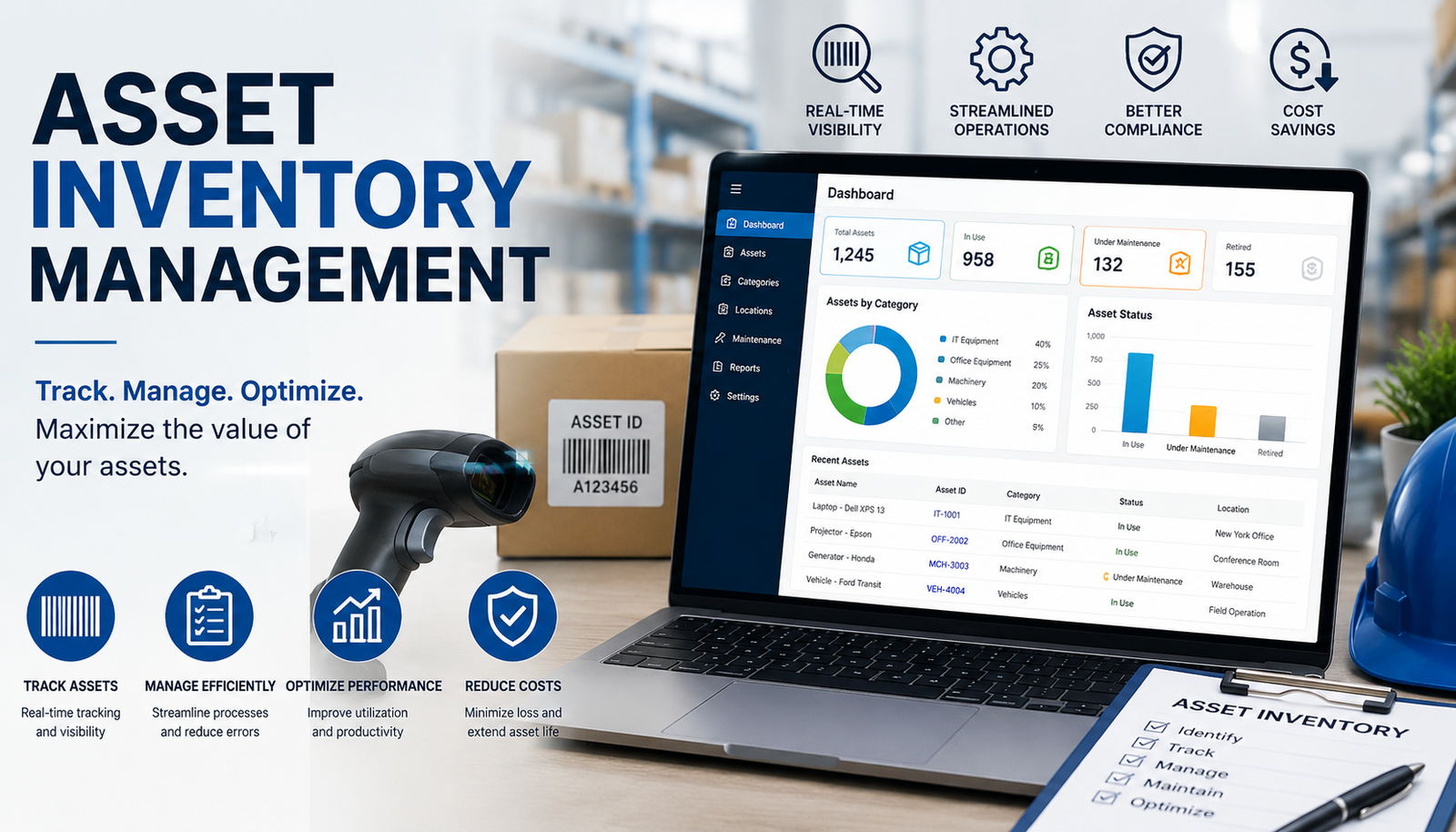
Modern businesses rely on thousands of assets, from computers and servers to machinery, software applications, and cloud resources. Without proper visibility, organizations can lose track of important resources, increase operational costs, and create security risks.
Asset inventory management provides a structured way to identify, record, monitor, and manage all business assets throughout their lifecycle. It helps companies understand what assets they own, where they are located, who is responsible for them, and how they are being used.
Whether you manage IT infrastructure, physical equipment, or cybersecurity risks, maintaining an accurate asset inventory improves efficiency, security, and decision-making.
What Is Asset Inventory Management?
Asset inventory management is the process of creating and maintaining a detailed record of an organization’s assets. It involves tracking important information such as asset type, ownership, location, condition, purchase details, maintenance history, and security status.
The asset inventory meaning goes beyond simply creating a list of items. A modern inventory system continuously updates asset information so businesses always have an accurate view of their resources.
Examples of assets commonly tracked include:
Employee laptops and mobile devices
Servers and network equipment
Software licenses
Manufacturing machines
Cloud applications
Vehicles and tools
A properly maintained inventory helps organizations reduce waste, improve maintenance planning, and respond quickly to operational or security issues.
Why Is Asset Inventory Management Important?
Businesses often struggle because they lack complete visibility into their assets. Missing information can result in unnecessary purchases, compliance problems, and cybersecurity vulnerabilities.
Improves Asset Visibility
The biggest advantage of asset inventory management is knowing exactly what assets exist within an organization.
Without accurate records, companies may experience:
Unknown devices connected to networks
Expired software licenses
Unused equipment
Lost resources
Complete visibility allows teams to make informed decisions and maintain better control.
Reduces Security Risks
A major reason organizations invest in asset tracking is cybersecurity.
When discussing what is asset inventory in cyber security, it refers to identifying and monitoring all digital assets that could become targets for attackers.
Security teams use asset inventories to discover:
Unknown servers
Unmanaged devices
Outdated software
Vulnerable applications
Organizations cannot protect assets they do not know exist.
Supports Better Maintenance and Operations
For physical assets, inventory management helps maintenance teams track:
Equipment condition
Repair history
Service schedules
Replacement requirements
For example, a manufacturing company can use asset records to schedule preventive maintenance before machines fail.
Types of Assets Managed in an Inventory System
Organizations manage different categories of assets depending on their industry and requirements.
A complete inventory strategy usually combines physical, digital, and IT assets into one centralized system.
How Does Asset Inventory Management Work?
An effective asset inventory process follows several important stages.
Asset Discovery
The first step is identifying all assets owned or used by an organization.
Businesses may collect information through:
Manual audits
Employee records
Automated discovery tools
Network scanning
Automated discovery is especially useful for large companies with complex IT environments.
Asset Classification
After assets are discovered, they are organized into categories.
Examples include:
Critical assets
Department-owned assets
High-risk devices
Retired resources
Classification helps teams prioritize important resources.
Asset Tracking and Monitoring
Asset information should be updated regularly.
Important tracking details include:
Asset owner
Location
Current status
Purchase date
Maintenance history
Security information
Outdated records reduce the value of an inventory system.
Asset Retirement
Every asset eventually reaches the end of its useful life.
Proper retirement involves:
Removing old equipment
Deleting sensitive data
Updating inventory records
Following disposal policies
This prevents security and compliance issues.
Asset Inventory Management vs Asset Management
Many people confuse asset inventory management with general asset management. Although related, they serve different purposes.
Asset inventory management is often the foundation of broader asset management strategies.
Asset Inventory Management Software: Features and Benefits
Modern organizations often use asset inventory management software to automate tracking and reporting.
These platforms help businesses replace spreadsheets with centralized systems.
Common features include:
Automated Asset Discovery
Software can automatically detect devices, applications, and connected resources.
Centralized Asset Database
Teams can store all asset information in one location.
Reporting and Analytics
Dashboards help organizations understand:
Asset usage
Security risks
Maintenance requirements
Ownership details
Integration Capabilities
Advanced solutions can connect with:
IT service management platforms
Security tools
Maintenance systems
Cloud platforms
Common Challenges in Asset Inventory Management
Although asset inventory provides many benefits, organizations often face challenges.
Incomplete Asset Records
Many businesses start with outdated spreadsheets or incomplete information.
The solution is regular auditing and automated discovery.
Lack of Ownership
Assets without assigned owners often become neglected.
Every important asset should have:
Responsible person
Department
Maintenance responsibility
Managing Large Environments
Enterprise organizations may manage thousands of assets across multiple locations.
Using automation and centralized tools makes large-scale management easier.
Asset Inventory Management Best Practices
Following proven practices helps organizations maintain accurate records.
Keep Information Updated
Review asset information regularly and remove outdated records.
Automate Where Possible
Automation reduces human errors and improves accuracy.
Create an Asset Inventory Template
A simple asset inventory template should include:
Templates provide a consistent structure before moving to advanced software.
Perform Regular Audits
Scheduled audits help identify:
Missing assets
Incorrect information
Security problems
Regular reviews keep inventory data reliable.
Real-World Asset Inventory Management Examples
Healthcare Industry
Hospitals manage thousands of devices, including:
Medical equipment
Computers
Monitoring systems
Asset inventories help maintain compliance and ensure equipment availability.
Manufacturing Industry
Factories use inventory systems to track:
Production machines
Tools
Replacement parts
This improves maintenance scheduling and reduces downtime.
Technology Companies
IT companies use asset inventories to manage:
Servers
Cloud infrastructure
Software applications
This improves cybersecurity visibility and operational control.
Future Trends in Asset Inventory Management
Asset management continues to evolve as businesses adopt new technology.
Artificial Intelligence
AI can help automatically discover assets, identify risks, and predict maintenance needs.
Cloud Asset Management
As companies move to cloud platforms, managing digital resources becomes increasingly important.
Real-Time Monitoring
IoT devices and connected systems allow organizations to track asset conditions continuously.
Conclusion
Asset inventory management is an essential practice for organizations that want better visibility, improved efficiency, and stronger security. By maintaining accurate records of physical and digital resources, businesses can reduce risks, control costs, and make better decisions.
From basic asset inventory templates to advanced software platforms, the right approach depends on an organization’s size and requirements. As businesses continue adopting cloud technology and connected systems, effective asset tracking will become even more important.
Frequently Asked Questions About Asset Inventory Management
What is asset inventory management?
Asset inventory management is the process of tracking, organizing, and maintaining records of an organization’s physical and digital assets to improve visibility and control.
What is asset inventory in cybersecurity?
Asset inventory in cybersecurity means identifying and monitoring all digital assets, including devices, applications, servers, and cloud resources, to reduce security risks.
Why do companies need asset inventory management?
Companies use asset inventory management to improve visibility, reduce costs, support compliance, and protect assets from operational and cybersecurity threats.
What information should an asset inventory include?
A complete inventory should include asset names, identification numbers, ownership details, location, condition, purchase information, and maintenance history.
What is asset inventory management software?
Asset inventory management software is a digital solution that helps organizations automatically track, organize, and monitor assets through centralized databases and reporting tools.
Can small businesses use asset inventory management?
Yes. Small businesses can use simple templates, spreadsheets, or affordable software solutions to track equipment, technology, and operational resources.
Leave a Reply