

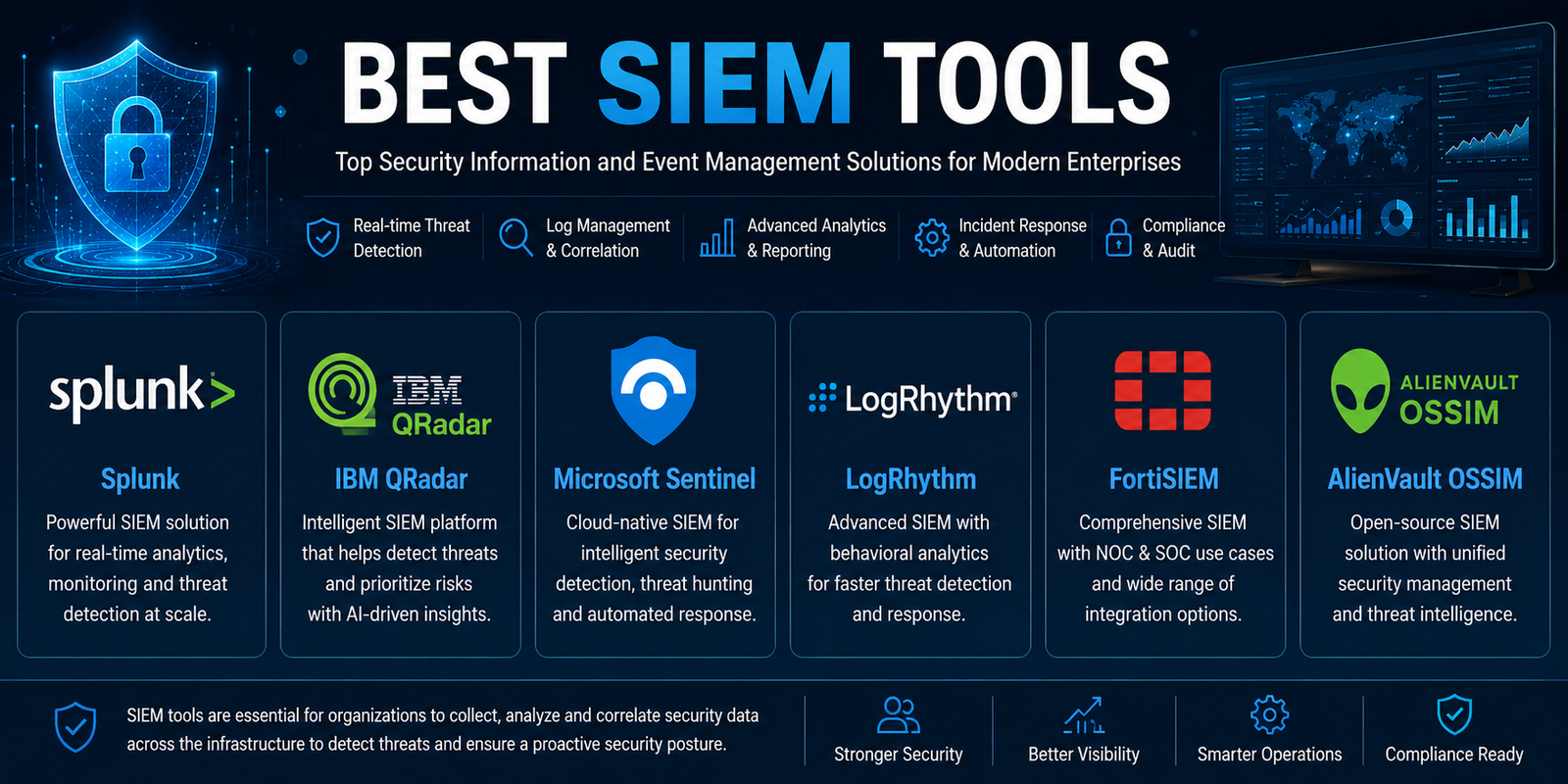
Cyber threats are becoming more advanced, and organizations now generate huge amounts of security data every day. Without proper monitoring, important threat signals can disappear among thousands of alerts. This is why businesses use Security Information and Event Management (SIEM) platforms to collect, analyze, and respond to security events.
Finding the best SIEM tools depends on several factors, including company size, security needs, budget, and technical expertise. Large enterprises may require advanced analytics and automation, while small businesses often look for affordable and easy-to-manage solutions.
This guide covers the leading SIEM platforms, their features, benefits, limitations, and the best options for different types of organizations.
What Are SIEM Tools?
SIEM tools are cybersecurity platforms that collect and analyze security data from multiple sources, including servers, applications, endpoints, cloud environments, and network devices. They help security teams detect threats, investigate incidents, and respond faster.
SIEM combines two major security functions:
Security Information Management (SIM) for collecting and storing security data
Security Event Management (SEM) for monitoring and detecting suspicious activities
Modern SIEM solutions use artificial intelligence, machine learning, and threat intelligence to identify unusual behavior and potential security risks.
For example, if an employee logs in from an unusual location and suddenly downloads sensitive company files, a SIEM platform can detect this pattern and alert the security team.
How Do SIEM Platforms Work?
SIEM solutions follow a process that turns raw security data into actionable information.
Data Collection
SIEM platforms collect logs and events from different sources, including:
Firewalls
Servers
Cloud applications
Endpoint devices
Identity systems
Network infrastructure
This centralized data collection gives organizations better visibility across their entire security environment.
Event Analysis and Correlation
After collecting security data, SIEM tools analyze events using:
Detection rules
Machine learning
User behavior analytics
Threat intelligence feeds
Correlation helps identify relationships between multiple events and detect complex attacks.
Alert Generation and Response
When suspicious activity is identified, SIEM platforms generate alerts for security teams. Advanced solutions can also automate responses through SOAR integrations.
Why Businesses Need SIEM Solutions
Organizations use SIEM platforms to improve security monitoring and reduce the impact of cyber threats.
Better Threat Detection
SIEM tools help identify:
Malware attacks
Unauthorized access
Data breaches
Insider threats
Suspicious network activity
By analyzing security events in real time, companies can respond before threats cause serious damage.
Compliance Support
Many industries require security monitoring and reporting to meet compliance standards.
SIEM solutions help organizations maintain records for:
GDPR
HIPAA
PCI DSS
Industry security requirements
Centralized Security Monitoring
Instead of managing multiple security systems separately, businesses can monitor their entire environment from one platform.
This is especially useful for companies using cloud, hybrid, and multi-location infrastructures.
Top 10 SIEM Tools Compared in 2026
The following SIEM tools list includes some of the most widely used security monitoring platforms.
Detailed Review of the Best SIEM Tools
Splunk Enterprise Security
Splunk is one of the most popular enterprise SIEM platforms. It provides powerful search capabilities, security analytics, and integrations with many cybersecurity technologies.
Key advantages include:
Advanced threat investigation
Custom dashboards
Large integration ecosystem
Strong analytics capabilities
However, Splunk can be expensive and often requires skilled security professionals for effective management.
It is best suited for large organizations with dedicated security teams.
Microsoft Sentinel
Microsoft Sentinel is a cloud-based SIEM solution designed for organizations using Microsoft technologies.
It integrates with:
Azure
Microsoft Defender
Microsoft 365
Active Directory
Advantages include:
AI-powered threat detection
Flexible cloud deployment
Strong Microsoft ecosystem support
The platform is especially useful for businesses already invested in Microsoft services.
IBM QRadar
IBM QRadar is an enterprise-focused SIEM platform designed for organizations that need advanced security monitoring and compliance reporting.
It is commonly used in:
Banking
Healthcare
Government sectors
Benefits include strong analytics, threat intelligence, and enterprise scalability.
The main limitation is that deployment and management can be complex.
Wazuh: Best SIEM Tools Open Source Option
Wazuh is one of the most popular open-source SIEM solutions available today.
It provides:
Log analysis
Endpoint monitoring
Vulnerability detection
Compliance monitoring
Its biggest advantages are affordability and flexibility.
However, organizations need technical expertise to configure and maintain the platform properly.
Wazuh is a strong choice for startups, small businesses, and security teams looking for a cost-effective solution.
Rapid7 InsightIDR
Rapid7 InsightIDR is designed for organizations that want simplified threat detection and security monitoring.
Important features include:
User behavior analytics
Automated investigations
Cloud monitoring
Incident detection
It is suitable for medium-sized businesses that need enterprise-level capabilities without extreme complexity.
Best SIEM Tools for Small Business
Small businesses often need security solutions that balance cost, usability, and protection.
Some recommended options include:
Wazuh
Wazuh is ideal for businesses that want a free and customizable SIEM platform. It provides strong monitoring capabilities without expensive licensing fees.
Graylog
Graylog works well for organizations that need centralized log management and flexible security analysis.
Microsoft Sentinel
Microsoft Sentinel is a good option for small companies already using Microsoft cloud services.
When selecting a SIEM solution, small businesses should focus on:
Affordable pricing
Easy deployment
Automation features
Vendor support
Best SIEM Tools Open Source Options
Open-source SIEM platforms are becoming popular because they reduce software costs and provide customization opportunities.
Open-source SIEM solutions provide flexibility but usually require more technical management compared to commercial platforms.
Key Features to Consider Before Choosing a SIEM Tool
Choosing the right SIEM platform requires evaluating important features.
Threat Detection Capabilities
A reliable SIEM should detect:
Suspicious login attempts
Malware activity
Network attacks
Data leaks
Cloud Support
Modern SIEM tools should support cloud platforms such as:
AWS
Microsoft Azure
Google Cloud
Automation Features
Automation helps security teams reduce manual work by:
Prioritizing alerts
Creating response workflows
Reducing false positives
Integration Options
The best SIEM solutions integrate with:
Firewalls
Endpoint security tools
Identity platforms
Ticketing systems
SIEM Pricing: What Should Businesses Expect?
SIEM pricing depends on several factors, including:
Amount of data collected
Number of users
Number of devices
Deployment method
Common pricing models include:
Data ingestion pricing
Subscription plans
Asset-based pricing
Enterprise SIEM platforms usually cost more because they include advanced analytics, automation, and professional support.
Open-source solutions reduce licensing expenses but may require additional technical resources.
SIEM vs XDR: What Is the Difference?
SIEM and XDR are related cybersecurity technologies but serve different purposes.
SIEM focuses on collecting and analyzing security data, while XDR focuses more on automated detection and response.
Many organizations now combine both technologies for stronger protection.
How to Choose the Right SIEM Platform
Before choosing a SIEM solution, businesses should consider their security requirements.
Define Security Goals
Determine whether your priority is:
Threat detection
Compliance
Cloud monitoring
Incident response
Evaluate Budget
Large enterprises may choose platforms like Splunk or QRadar, while smaller companies may prefer Wazuh or Graylog.
Consider Technical Skills
Some SIEM platforms require experienced security teams, while others offer simpler cloud-based deployment.
Test Before Deployment
Using trials and demonstrations can help organizations evaluate whether a SIEM platform matches their requirements.
Common SIEM Implementation Challenges
Too Many Security Alerts
Large numbers of alerts can overwhelm security teams.
Organizations should improve detection rules and use automation to reduce unnecessary notifications.
High Data Costs
Large amounts of security data can increase SIEM expenses.
Businesses can control costs through data filtering and better storage management.
Lack of Skilled Professionals
SIEM management requires cybersecurity expertise.
Companies can solve this challenge through training, managed SIEM services, or automation.
Conclusion
The right SIEM solution depends on your organization's size, security goals, budget, and technical capabilities. Enterprise companies may benefit from platforms like Splunk, IBM QRadar, or Microsoft Sentinel, while smaller teams can consider Wazuh and Graylog.
A successful SIEM deployment is not only about choosing powerful software. It requires proper configuration, skilled monitoring, and continuous improvement. By comparing features, pricing, and use cases, businesses can select a platform that strengthens their cybersecurity strategy.
Frequently Asked Questions About Best SIEM Tools
What are the best SIEM tools in 2026?
The best SIEM tools include Splunk, Microsoft Sentinel, IBM QRadar, CrowdStrike Falcon Next-Gen SIEM, Rapid7 InsightIDR, Wazuh, and Graylog. The right choice depends on business requirements and budget.
Which are the best SIEM tools for small business?
The best SIEM tools for small business include Wazuh, Graylog, and Microsoft Sentinel because they provide security monitoring with flexible pricing options.
What are the best SIEM tools open source?
Popular open-source SIEM platforms include Wazuh, Security Onion, OSSEC, and Graylog Open. They provide flexibility but require technical management.
What are the best SIEM tools Reddit users recommend?
Cybersecurity communities often discuss platforms like Splunk, Sentinel, Wazuh, and Graylog. Recommendations usually depend on company size, security needs, and technical experience.
Is Splunk better than Microsoft Sentinel?
Splunk is often preferred by large enterprises needing advanced analytics, while Microsoft Sentinel is a strong option for organizations using Microsoft cloud services.
How much do SIEM tools cost?
SIEM pricing varies widely. Open-source platforms may be free, while enterprise solutions can become expensive depending on data volume and features.
Leave a Reply