

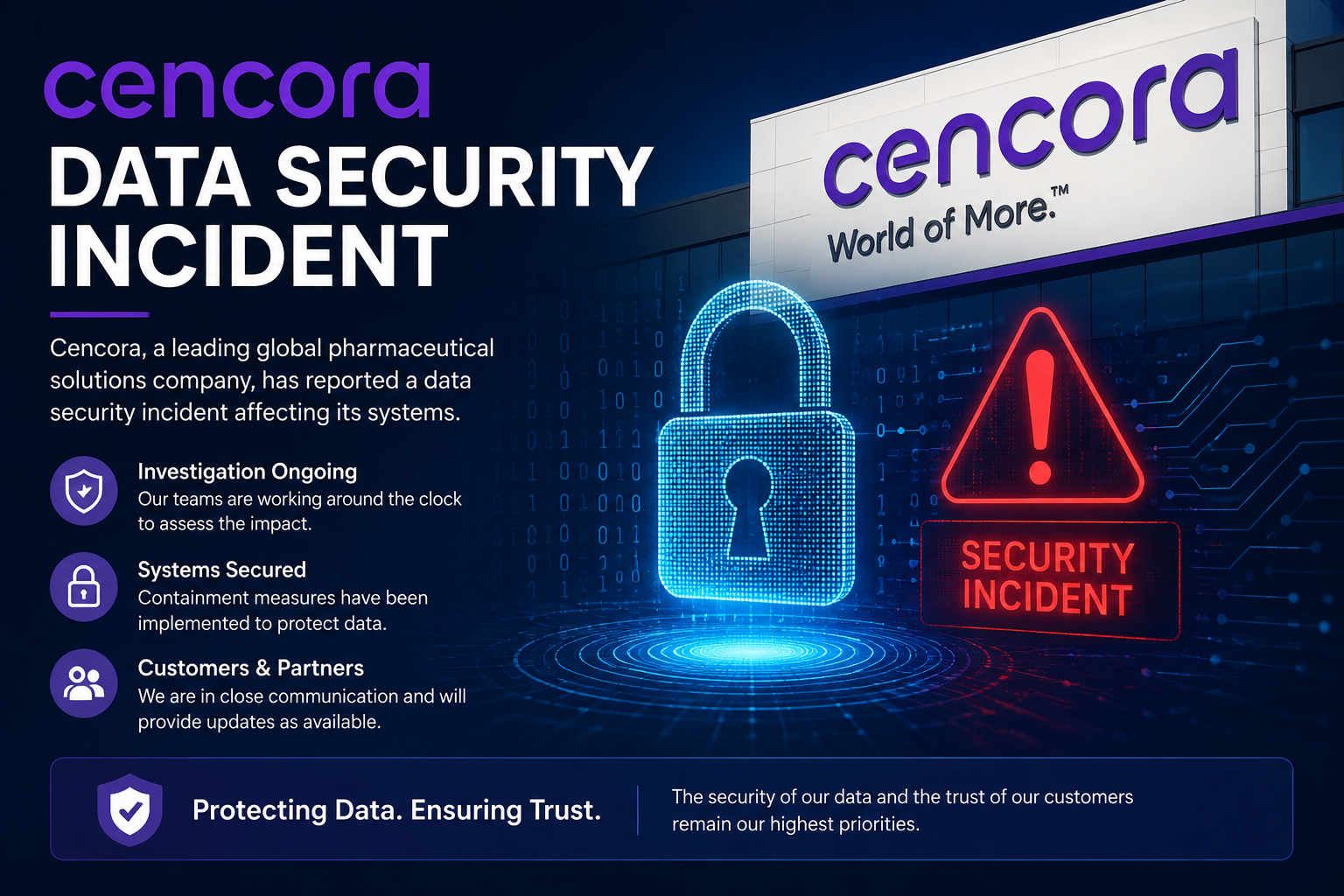
The Cencora data security incident is one of the more significant healthcare-related data incidents to attract attention because potentially sensitive personal and health information was involved. Cencora’s Lash Group reported that it discovered data had been exfiltrated from its information systems on February 21, 2024. After an investigation, the company determined that personal information may have been involved.
The incident later led to a class-action lawsuit and a $40 million settlement. The official settlement website now states that the settlement received final court approval on July 23, 2026, while the administrator is processing claims and anticipates beginning distributions to eligible claimants in August 2026.
This guide explains what happened, what information may have been involved, who may qualify for settlement benefits, how payments work, and what the latest status means for affected individuals.
What Happened in the Cencora Data Security Incident?
The incident involved information systems operated by Lash Group, a Cencora business that works with pharmaceutical companies, pharmacies, healthcare providers and patient-support programs.
According to Cencora's official notice, Lash Group discovered on February 21, 2024, that data had been exfiltrated from its systems. The company immediately took containment measures and launched an investigation involving law enforcement, cybersecurity experts and outside lawyers. On May 8, 2024, Lash Group confirmed that personal information may have been involved.
It is important not to confuse confirmed facts with speculation. Cencora's notice confirms unauthorized data exfiltration, but it does not establish a detailed technical attack chain or publicly identify the attackers. The official notice also says there was no evidence at that time that the information had been publicly disclosed or fraudulently misused as a result of the incident.
Cencora Data Security Incident Timeline
The official settlement records identify the underlying lawsuit as Anaya, et al. v. Cencora, Inc., et al., No. 2:24-cv-02961-CMR, in the U.S. District Court for the Eastern District of Pennsylvania.
What Information Was Involved?
One of the most important questions surrounding the Cencora data security incident is what information may have been exposed.
Cencora's CareDx notice says potentially involved information could include first and last names, addresses, dates of birth, Social Security numbers, and the fact that a diagnostic test may have been performed. However, not every data element was involved for every individual. Cencora also stated that there was no evidence that diagnostic-test results were involved.
The broader settlement materials use a wider description of Personal Information because the litigation and settlement class cover information potentially involved across the incident. That material can include health and insurance information, financial information, transactional information, electronic identifiers and other sensitive categories.
Confirmed vs. Unconfirmed Information
A useful way to understand the incident is to separate documented facts from assumptions:
This distinction matters when researching whether the Cencora data security incident was a confirmed breach, what data was affected, and what remains uncertain.
How Many People Were Affected?
The number of affected individuals is an important part of the incident, but readers should be careful when comparing numbers reported by different sources.
Terms such as affected individuals, records, accounts, and data elements describe different things. One person can have multiple pieces of information involved, so a record count does not necessarily equal the number of people affected.
The official settlement materials define the Settlement Class based on individuals whose Personal Information was involved and who received incident notice or substitute notice, along with certain individuals who met specified “Inquiry Notice” circumstances.
For that reason, the most useful question is not simply “How many records were exposed?” but whether an individual's information was included in the incident and whether that person falls within the applicable settlement definition.
Why Was Lash Group Involved?
Lash Group is important because the incident was connected to information it possessed through current or past partnerships involving patient-support programs.
These programs can involve pharmaceutical companies, pharmacies, healthcare providers and other organizations. As a result, someone could encounter a Cencora or Lash Group notice even if Cencora was not a company they directly recognized as providing services to them.
Cencora explains that Lash Group possessed information through partnerships with organizations connected to its patient-support programs.
What Did Cencora Do After the Incident?
Cencora says it responded by taking containment measures and launching an investigation with cybersecurity specialists, law enforcement and outside legal counsel.
The company also worked to determine whether personal or protected health information had been compromised and notified potentially affected individuals. Cencora further said it was reinforcing its information-security protocols following the incident.
For people whose information may have been involved, the original notice offered 24 months of Experian IdentityWorks credit monitoring and remediation services, subject to the original enrollment deadline.
What Should Affected Individuals Do?
If you received a Cencora or Lash Group notice, practical identity-protection steps are more useful than simply changing every password you own.
Review financial and credit activity
Check bank statements, credit-card statements and credit reports for accounts or transactions you do not recognize. Cencora's official guidance specifically recommends reviewing financial statements and credit reports.
Watch for identity-theft indicators
Unexpected account openings, unfamiliar transactions, unusual insurance activity or other suspicious correspondence can be warning signs.
Consider a fraud alert or credit freeze
Depending on your circumstances, a fraud alert or security freeze can provide additional protection against unauthorized credit activity. Cencora's reference guide explains both options.
Keep your incident documentation
If you incurred a loss that may be related to the incident, retain relevant bank statements, invoices, receipts, screenshots and other supporting documentation. Settlement rules specifically require reasonable documentation for a Documented Loss Payment.
Is the Cencora Data Security Incident Settlement Legitimate?
Yes. The Cencora Data Security Incident Settlement is an authorized federal class-action settlement website, and the official site identifies the case as Anaya, et al. v. Cencora, Inc., et al., No. 2:24-cv-02961-CMR. It states that the website was authorized by the court and is controlled by the court-approved settlement administrator.
Official Cencora Data Security Incident Settlement Website
That does not mean every email, text message or website claiming to represent the settlement is legitimate. If you receive a message about the settlement, verify it against the official settlement website rather than clicking an unfamiliar link.
What Is the Cencora $40 Million Settlement?
The settlement establishes a $40 million Settlement Fund. It also includes enhanced data and information security measures that Cencora has undertaken separately from the settlement fund.
The settlement does not mean a court found Cencora guilty of wrongdoing. The official FAQ states that Cencora denies the allegations, the case did not go to trial, and no court made a determination that Cencora violated the law. The settlement resolves the litigation without an admission of wrongdoing.
What Is the Settlement Payout Per Person?
Eligible class members could select one of two settlement benefit options under the settlement terms.
A Documented Loss Payment could cover qualifying documented losses or unreimbursed expenses related to the incident for up to $5,000 per person, subject to a $5 million aggregate cap. Supporting documentation is required, such as statements, invoices, receipts or screenshots.
Alternatively, an eligible claimant could request a Cash Fund Payment without documentation. The amount is not a guaranteed fixed payment. It depends on the remaining settlement funds, approved expenses, documented-loss payments and the number of approved cash-payment claims.
Therefore, $5,000 is not the guaranteed Cencora settlement payout per person. It is the maximum stated for the Documented Loss Payment category, subject to the settlement's conditions and aggregate cap.
What Is the Cencora Settlement Payout Date?
The official settlement website's July 23, 2026 update says the settlement received final approval and that the administrator is processing the large volume of submitted claims. It anticipates beginning distribution of settlement proceeds to eligible claimants in August 2026.
That wording is important: August 2026 is an anticipated distribution period, not a guarantee that every claimant will receive payment on the same date.
If you submitted a claim, the best source for your individual status is the official settlement administrator.
Current Cencora Data Security Incident Status
As of August 2026, the most significant update is that the $40 million settlement has received final court approval.
The settlement administrator is processing submitted claims and expects distributions to eligible claimants to begin during August 2026. Because the administrator says it is handling a large volume of claims, individual payment timing can vary.
For the latest information, use the official settlement website rather than relying on older breach articles or social-media posts.
Cybersecurity Lessons From the Cencora Incident
The incident also illustrates why healthcare organizations need security controls that extend beyond basic perimeter defenses.
Sensitive patient-support data should be protected with strong access controls, identity monitoring, data classification, segmentation, logging and rapid incident-response processes. Organizations should also understand where sensitive information is stored and which partners or systems can access it.
A practical incident-response model is:
Detect → Contain → Investigate → Identify affected data → Notify → Remediate → Strengthen controls
The Cencora incident also highlights third-party risk. Healthcare data can move through complex ecosystems involving pharmaceutical companies, support-program providers, pharmacies and healthcare organizations. Security programs therefore need visibility across the entire data lifecycle rather than focusing exclusively on one corporate network.
Conclusion
The Cencora data security incident involved unauthorized access and exfiltration of data from systems associated with Lash Group, with potentially sensitive personal and health-related information involved. Cencora investigated the incident, notified potentially affected individuals and introduced additional security measures.
The story has also moved beyond the original 2024 incident. The $40 million settlement received final approval on July 23, 2026, and the administrator currently anticipates beginning distributions in August 2026.
For anyone researching the incident, the most reliable approach is to separate confirmed facts from speculation and use the official Cencora and settlement materials for current information.
Frequently Asked Questions
What happened in the Cencora data security incident?
Cencora's Lash Group discovered on February 21, 2024, that data had been exfiltrated from its information systems. An investigation later determined that personal information may have been involved.
Is the Cencora data security incident settlement legitimate?
Yes. The settlement is a court-authorized federal class-action settlement administered through the official Cencora Data Security Incident Settlement website.
What information was involved in the Cencora incident?
Potentially involved information included names, addresses, dates of birth, Social Security numbers and information indicating that a diagnostic test may have been performed. Not every person had every data element involved.
Is the Cencora $40 million settlement approved?
Yes. The official settlement website announced that final approval was granted on July 23, 2026.
How much is the Cencora settlement payout per person?
Eligible claimants could seek a Documented Loss Payment of up to $5,000 per person, subject to documentation requirements and a $5 million aggregate cap. Cash Fund Payments have no guaranteed fixed amount and depend on the remaining settlement funds and approved claims.
When will Cencora settlement payments be sent?
The settlement administrator says it anticipates beginning distribution to eligible claimants in August 2026. Individual payment timing may vary while claims are processed.
What should I do if I believe my information was affected?
Review your financial and credit activity, monitor for identity-theft indicators, keep documentation of qualifying losses, and use the official settlement administrator for questions about claim status. Cencora also provides identity-protection guidance in its incident notice.
Leave a Reply