

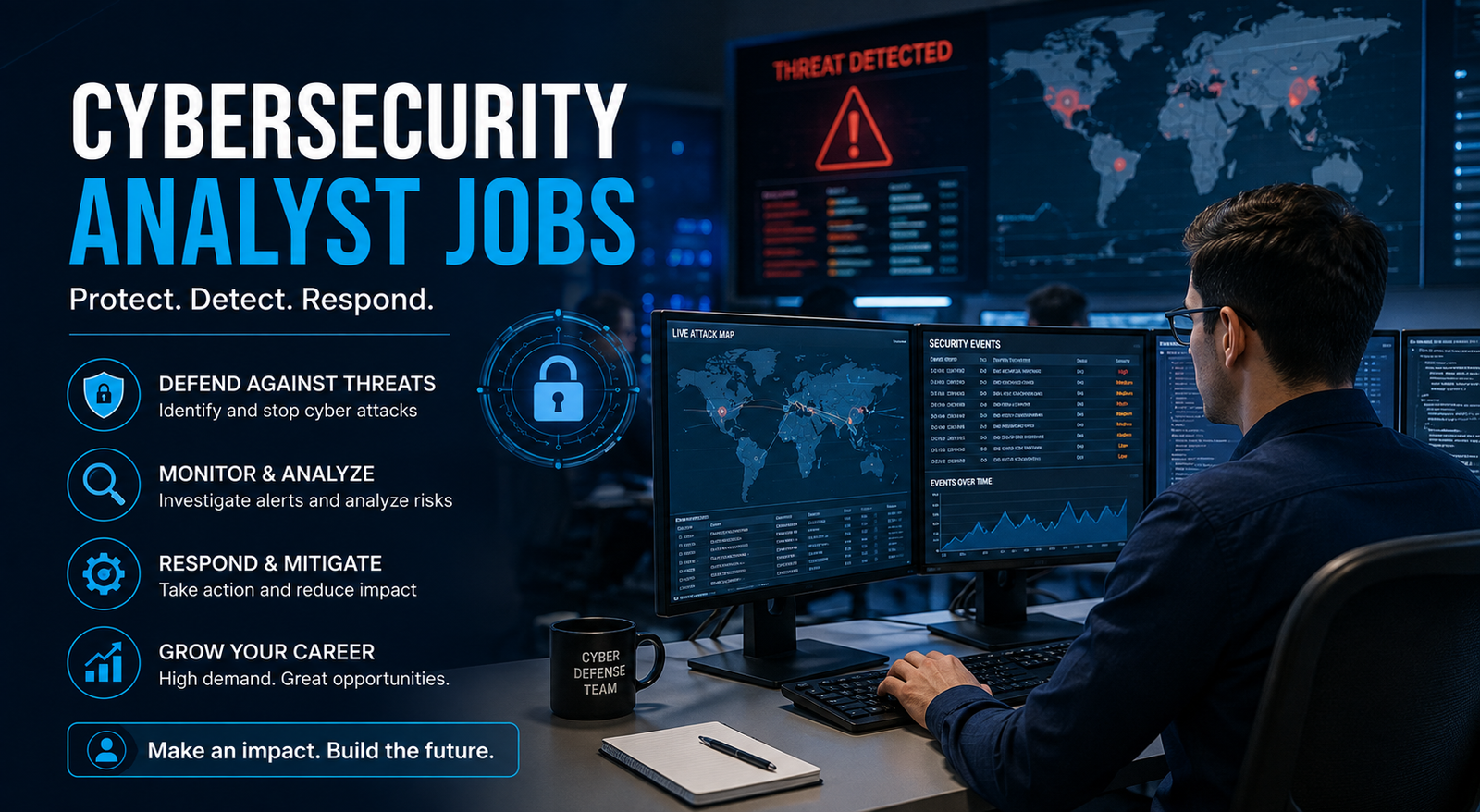
Cybersecurity analyst jobs have become some of the most sought-after technology careers as organizations face increasingly sophisticated cyber threats. Businesses of all sizes need professionals who can monitor networks, investigate security incidents, and protect sensitive data from cybercriminals. As a result, demand continues to grow across industries such as healthcare, finance, government, retail, and technology.
Whether you're a recent graduate, an IT professional looking to specialize, or someone considering a career change, cybersecurity offers excellent opportunities for long-term growth. Many employers now offer entry level cybersecurity analyst jobs, while experienced professionals can pursue specialized or leadership positions. In addition, the rise of cybersecurity analyst jobs remote, cybersecurity analyst jobs work from home, and Cyber Security Analyst Remote jobs Worldwide has made this career more accessible than ever.
This guide explains what cybersecurity analysts do, the skills employers value, the tools used daily, certification options, and how to start building a successful cybersecurity career.
What Are Cybersecurity Analyst Jobs?
Cybersecurity analyst jobs focus on protecting an organization's digital infrastructure from cyberattacks, unauthorized access, malware, phishing attempts, and data breaches. These professionals continuously monitor systems, identify vulnerabilities, investigate suspicious activities, and recommend security improvements.
Unlike general IT support roles, cybersecurity analysts concentrate on defending networks, applications, cloud environments, and endpoints against evolving threats. They work closely with IT teams, security engineers, and incident response specialists to strengthen an organization's overall security posture.
A cybersecurity analyst may work for a private company, government agency, healthcare provider, financial institution, educational organization, or managed security service provider (MSSP). Depending on the employer, responsibilities can range from monitoring security alerts to participating in digital forensic investigations.
Why Organizations Hire Cybersecurity Analysts
Businesses rely on cybersecurity analysts to:
Detect cyber threats before they cause damage.
Monitor networks and cloud environments.
Investigate suspicious activities.
Respond to security incidents.
Reduce business risks.
Meet compliance requirements.
Protect customer and company data.
Improve overall cybersecurity defenses.
As cyber threats continue to evolve, organizations increasingly invest in skilled professionals who can proactively identify and respond to security risks.
What Does a Cybersecurity Analyst Do Every Day?
A cybersecurity analyst's daily work involves much more than watching dashboards. Every day brings new alerts, vulnerabilities, and security challenges that require quick thinking and technical expertise.
Typical responsibilities include reviewing security logs, investigating suspicious behavior, responding to incidents, scanning systems for vulnerabilities, documenting findings, and recommending improvements to security controls.
Typical Daily Responsibilities
Most cybersecurity analysts perform tasks such as:
Monitoring Security Information and Event Management (SIEM) platforms.
Investigating unusual login attempts.
Analyzing malware and phishing emails.
Conducting vulnerability assessments.
Reviewing firewall and endpoint alerts.
Supporting incident response efforts.
Creating security reports.
Collaborating with IT and compliance teams.
Updating security policies and procedures.
Researching emerging cyber threats.
These responsibilities vary depending on the organization's size, industry, and security maturity.
A Typical Workday
Although every organization operates differently, this workflow reflects the routine responsibilities many analysts handle during a typical workday.
Types of Cybersecurity Analyst Jobs
Cybersecurity is a broad field with several specialized analyst roles. Understanding these positions helps job seekers identify career paths that match their interests and experience.
Professionals often begin with entry level cybersecurity analyst jobs before advancing into more specialized positions such as threat intelligence or incident response.
Skills Required for Cybersecurity Analyst Jobs
Successful cybersecurity analysts combine technical expertise with strong analytical and communication skills. Employers look for candidates who can understand complex systems while explaining security risks clearly to both technical and non-technical stakeholders.
Technical Skills
A strong technical foundation is essential for cybersecurity analyst jobs. Important skills include:
Computer networking (TCP/IP, DNS, HTTP, VPN)
Windows and Linux administration
Active Directory
Firewall management
Cloud security fundamentals
Vulnerability management
Endpoint detection and response (EDR)
Security Information and Event Management (SIEM)
Malware analysis basics
Identity and access management
Python or PowerShell scripting
Log analysis
Risk assessment
Incident response
Developing hands-on experience through home labs, virtual machines, and cybersecurity platforms significantly improves technical proficiency.
Soft Skills
Technical knowledge alone isn't enough. Employers also value professionals who can solve problems under pressure and communicate effectively.
Important soft skills include:
Critical thinking
Attention to detail
Problem-solving
Communication
Team collaboration
Time management
Adaptability
Decision-making
Curiosity and continuous learning
Cybersecurity is constantly evolving, making lifelong learning an essential part of every analyst's career.
Skills Progression
Tools Used by Cybersecurity Analysts
Modern cybersecurity analysts rely on specialized tools to monitor systems, detect threats, investigate incidents, and improve organizational security. Becoming familiar with these platforms greatly improves employability and prepares candidates for real-world environments.
Some of the most commonly used tools include:
Learning even a few of these platforms through online labs or free training environments can make candidates more competitive in today's job market.
Education Requirements for Cybersecurity Analyst Jobs
There is no single path into cybersecurity. While many employers prefer candidates with a bachelor's degree in computer science, information technology, or cybersecurity, practical skills and certifications often carry equal or greater weight.
Many professionals successfully transition from IT support, networking, system administration, or help desk roles after gaining cybersecurity knowledge and hands-on experience.
Individuals without a traditional degree can still qualify for cybersecurity analyst jobs by building technical skills, earning respected certifications, and creating practical security projects that demonstrate real-world abilities.
Employers increasingly value candidates who can solve problems and demonstrate practical experience rather than relying solely on academic credentials.
Best Certifications for Cybersecurity Analyst Jobs
Professional certifications validate technical knowledge and demonstrate commitment to continuous learning. They also help candidates stand out when applying for both entry-level and experienced positions.
For most beginners, starting with the Google Cybersecurity Certificate or CompTIA Security+ provides a strong foundation before progressing to more advanced certifications such as CySA+ or SC-200. These credentials demonstrate practical knowledge and can improve opportunities for Entry level Cyber Security Analyst (Remote jobs) as well as traditional on-site roles.
Cybersecurity Analyst Jobs Salary
One of the biggest reasons professionals pursue cybersecurity analyst jobs is the excellent earning potential. Salaries vary depending on experience, certifications, industry, and location, but the field consistently offers competitive compensation.
Professionals with strong technical skills, hands-on experience, and recognized certifications often earn higher salaries than candidates entering the field without practical experience. Organizations in finance, healthcare, cloud computing, and government typically offer some of the highest-paying positions.
Professionals searching for Cybersecurity analyst jobs salary or Cyber Security Analyst remote salary should remember that remote positions may vary based on employer location, experience, and regional pay policies.
Industries Hiring Cybersecurity Analysts
Nearly every industry depends on cybersecurity professionals to protect sensitive data and maintain business continuity. As digital transformation accelerates, organizations continue expanding their security teams.
Industries actively hiring cybersecurity analysts include:
Banking and financial services
Healthcare organizations
Government agencies
Defense contractors
Technology companies
Cloud service providers
Retail and e-commerce
Manufacturing
Telecommunications
Educational institutions
Consulting firms
Managed Security Service Providers (MSSPs)
Each sector presents unique cybersecurity challenges, allowing professionals to specialize in areas that align with their interests and long-term career goals.
Cybersecurity Analyst Jobs Remote
Remote work has become increasingly common across the cybersecurity industry. Many organizations now operate Security Operations Centers (SOCs) that support distributed teams, making Cybersecurity analyst jobs remote more accessible than ever.
Employers often provide secure VPN access, cloud-based monitoring platforms, and collaboration tools that enable analysts to investigate incidents from virtually anywhere. Remote positions can offer greater flexibility while still involving the same core responsibilities as on-site roles.
Common remote opportunities include:
Security Operations Center (SOC) Analyst
Incident Response Analyst
Threat Intelligence Analyst
Vulnerability Analyst
Cloud Security Analyst
Professionals interested in Cybersecurity analyst jobs work from home, Cybersecurity analyst jobs from home, or Cyber Security Analyst Remote jobs Worldwide should build strong communication skills and become comfortable using cloud-based security platforms, as remote collaboration is a key part of these roles.
How to Become a Cybersecurity Analyst
Breaking into cybersecurity may seem challenging, but a structured learning path makes the process far more manageable.
Start by building a strong understanding of computer networks, operating systems, and basic security principles. Learning how data flows across networks and how attackers exploit vulnerabilities provides an essential foundation.
Next, gain practical experience through virtual labs, home lab environments, Capture the Flag (CTF) challenges, and cybersecurity learning platforms. Hands-on practice demonstrates your ability to apply theoretical knowledge in realistic scenarios.
After developing technical skills, earn industry-recognized certifications, build a portfolio of security projects, optimize your LinkedIn profile, and begin applying for internships or entry level cybersecurity analyst jobs.
Career Roadmap
Following a structured roadmap helps professionals steadily develop the experience needed for long-term career success.
How to Get Your First Cybersecurity Analyst Job
Landing your first cybersecurity position requires more than certifications alone. Employers increasingly seek candidates who can demonstrate practical knowledge and a willingness to learn.
To improve your chances:
Build a home cybersecurity lab.
Complete hands-on security projects.
Participate in Capture the Flag competitions.
Create a GitHub portfolio.
Earn respected certifications.
Attend cybersecurity networking events.
Apply for internships and entry-level positions.
Customize your resume for each application.
Practice technical interview questions.
Even if you don't meet every listed qualification, many employers value enthusiasm, continuous learning, and transferable IT skills.
Resume Checklist for Cybersecurity Analyst Jobs
A well-structured resume helps recruiters quickly identify your strengths.
Include:
Professional summary
Technical skills
Certifications
Relevant projects
Home lab experience
Internship or work experience
Education
GitHub or portfolio links
Soft skills
Professional achievements
Example Professional Summary
"Motivated cybersecurity professional with hands-on experience in network monitoring, vulnerability assessment, and incident response through practical labs and personal projects. Passionate about protecting organizational systems and continuously expanding technical expertise."
Common Cybersecurity Analyst Interview Questions
Preparing for interviews increases confidence and improves your chances of securing an offer.
Common questions include:
What is the CIA Triad?
Explain confidentiality, integrity, and availability, and why these principles form the foundation of information security.
What is a SIEM?
Describe how Security Information and Event Management platforms collect, analyze, and correlate security events to detect threats.
What is the difference between IDS and IPS?
Explain that an Intrusion Detection System identifies suspicious activity, while an Intrusion Prevention System can automatically block malicious traffic.
How would you investigate a phishing email?
Discuss analyzing headers, links, attachments, sender reputation, and indicators of compromise before recommending containment actions.
How do you prioritize vulnerabilities?
Explain using risk-based prioritization by considering severity, exploitability, business impact, and asset criticality.
Challenges Cybersecurity Analysts Face
Although cybersecurity is rewarding, professionals encounter several challenges throughout their careers.
Common challenges include:
Alert fatigue
Rapidly evolving cyber threats
False positives
Limited security resources
Compliance requirements
Increasing attack sophistication
Balancing security with business needs
Successful analysts continuously improve their technical skills, stay informed about emerging threats, and collaborate effectively with cross-functional teams.
Future Outlook for Cybersecurity Analyst Jobs
The future remains exceptionally promising for cybersecurity professionals. As organizations expand cloud adoption, implement Zero Trust architectures, and integrate artificial intelligence into security operations, demand for skilled analysts is expected to remain strong.
Emerging technologies such as automation, extended detection and response (XDR), threat intelligence platforms, and AI-assisted security monitoring will continue transforming analyst responsibilities. Professionals who embrace continuous learning and adapt to evolving technologies will be well-positioned for long-term career growth.
Conclusion
Cybersecurity analyst jobs offer an exciting combination of meaningful work, strong career growth, and competitive earning potential. As organizations continue strengthening their cyber defenses, demand for skilled analysts remains high across virtually every industry.
Whether you're pursuing entry level cybersecurity analyst jobs, transitioning from another IT role, or exploring Cyber Security Analyst Remote jobs Worldwide, success depends on building practical skills, earning respected certifications, gaining hands-on experience, and committing to continuous learning. By following a structured career path and staying current with emerging technologies, you can build a rewarding and future-proof career in cybersecurity.
Frequently Asked Questions
Are cybersecurity analyst jobs good for beginners?
Yes. Many organizations offer entry-level opportunities for candidates with foundational cybersecurity knowledge, practical skills, and relevant certifications.
Can I become a cybersecurity analyst without a degree?
Yes. Many employers value certifications, technical skills, home lab experience, and practical projects alongside or instead of a traditional degree.
Which certification should I earn first?
Many beginners start with the Google Cybersecurity Certificate or CompTIA Security+ before progressing to more advanced certifications.
Is coding required for cybersecurity analyst jobs?
Basic scripting in Python or PowerShell is helpful, but extensive programming knowledge is not required for most entry-level analyst roles.
Can cybersecurity analysts work remotely?
Yes. Many organizations now offer remote and hybrid opportunities, including Cybersecurity analyst jobs remote, Cybersecurity analyst jobs work from home, and Cybersecurity analyst jobs from home.
What is the difference between a SOC analyst and a cybersecurity analyst?
SOC analysts primarily monitor and respond to security alerts within a Security Operations Center, while cybersecurity analysts often perform broader responsibilities such as vulnerability management, risk assessment, incident response, and security improvement initiatives.
Leave a Reply