

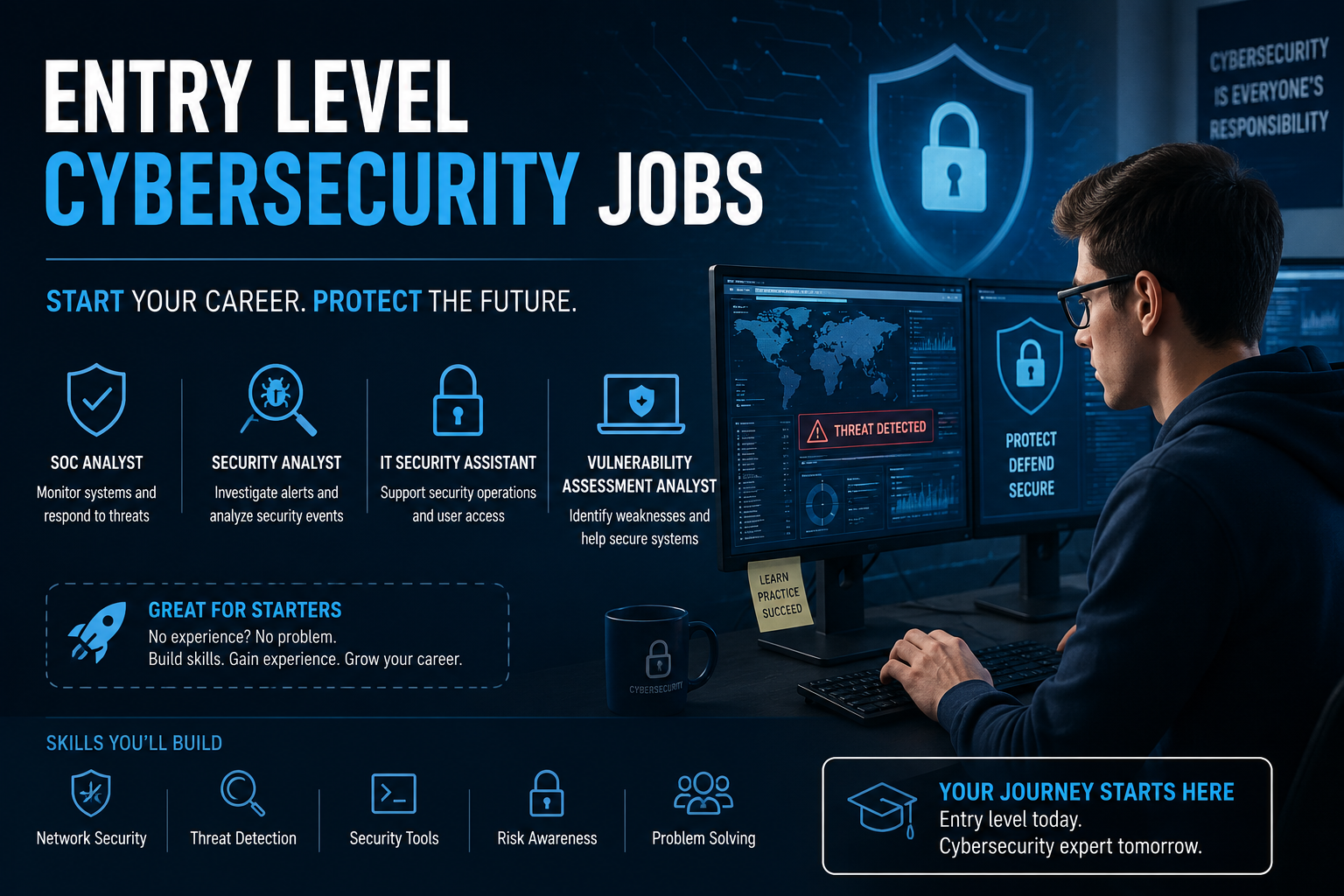
Cybersecurity has become one of the fastest-growing career fields as businesses, governments, and organizations continue to face increasing cyber threats. From protecting sensitive data to preventing ransomware attacks, cybersecurity professionals play a critical role in keeping digital systems secure.
Many beginners assume they need years of IT experience or an advanced computer science degree to enter this field. However, there are many entry level cybersecurity jobs available for people who build the right skills, earn relevant certifications, and gain practical experience through labs and projects.
Whether you are a recent graduate, career changer, or someone exploring technology for the first time, cybersecurity offers multiple pathways to start a successful career. This guide explains the best beginner roles, required skills, certifications, salary expectations, and how to land your first cybersecurity position.
What Are Entry Level Cybersecurity Jobs?
Entry level cybersecurity jobs are beginner-friendly positions designed for individuals who have foundational knowledge of information technology, networking, security concepts, and risk management.
These roles usually involve monitoring security systems, identifying threats, responding to incidents, managing access controls, and supporting senior security professionals.
Common responsibilities include:
Monitoring security alerts
Investigating suspicious activities
Performing vulnerability checks
Maintaining security tools
Supporting incident response teams
Documenting security procedures
Many organizations are willing to hire candidates without previous cybersecurity experience if they demonstrate technical ability through certifications, home labs, internships, and personal projects.
Why Cybersecurity Is a Good Career Choice in 2026
The demand for cybersecurity professionals continues to increase because organizations are dealing with more sophisticated cyberattacks, cloud adoption, and expanding digital infrastructure.
Companies need skilled professionals who can protect:
Networks
Cloud environments
Applications
Customer information
Business systems
Cybersecurity also provides strong career growth opportunities. Many professionals begin with entry level positions and later move into roles such as security engineer, penetration tester, cloud security specialist, or security architect.
The field also offers flexibility, with many entry level cybersecurity jobs remote opportunities available, especially for roles involving security monitoring, compliance, and analysis.
Best Entry Level Cybersecurity Jobs for Beginners
There are several cybersecurity roles suitable for people starting their careers.
Security Operations Center (SOC) Analyst
A SOC Analyst is one of the most common starting positions in cybersecurity.
SOC analysts monitor security alerts, investigate potential threats, analyze logs, and help respond to security incidents.
Skills needed:
SIEM tools
Networking basics
Threat detection
Log analysis
Incident response fundamentals
This role is ideal for beginners who enjoy investigation and problem-solving.
Junior Cybersecurity Analyst
A Junior Cybersecurity Analyst supports security teams by analyzing vulnerabilities, reviewing security events, and assisting with security improvements.
Typical tasks include:
Monitoring systems
Creating reports
Reviewing vulnerabilities
Supporting security policies
Information Security Analyst
Information Security Analysts help organizations protect their systems and data.
Responsibilities may include:
Risk assessments
Security monitoring
Policy management
Compliance support
IT Support Specialist (Cybersecurity Pathway)
Many cybersecurity professionals begin in IT support roles.
Working with operating systems, networks, user accounts, and troubleshooting provides valuable experience that helps transition into cybersecurity.
GRC Analyst
Governance, Risk, and Compliance (GRC) roles are excellent options for beginners interested in cybersecurity policies, regulations, and risk management.
These positions require less programming and focus more on:
Security standards
Audits
Documentation
Compliance frameworks
Entry Level Cybersecurity Jobs Salary Expectations
Salary depends on location, skills, certifications, and experience. In the United States, beginner cybersecurity positions generally offer competitive salaries compared with many other entry-level technology careers.
Below is a general comparison:
Salaries can vary significantly based on region. For example, entry level cybersecurity jobs USA markets in major technology hubs often pay more than smaller regions.
Entry Level Cyber Security Jobs With No Experience: How to Get Started
Many beginners search for entry level cyber security jobs with no experience because they believe employers only hire experienced professionals.
The reality is that you can build credibility without a traditional cybersecurity job history.
Learn Networking and IT Fundamentals
Cybersecurity starts with understanding how technology works.
Focus on:
TCP/IP
DNS
HTTP/HTTPS
Firewalls
Operating systems
Network security concepts
Earn Beginner Certifications
Certifications help prove your knowledge to employers.
Popular beginner certifications include:
CompTIA Security+
Google Cybersecurity Certificate
ISC2 Certified in Cybersecurity (CC)
CompTIA Network+
Security+ is especially popular because many employers recognize it as a foundation-level cybersecurity certification.
Practice With Cybersecurity Labs
Hands-on experience is one of the best ways to stand out.
Useful platforms include:
TryHackMe
Hack The Box
Blue Team Labs Online
PortSwigger Web Security Academy
Create projects such as:
Setting up a home security lab
Analyzing malware samples safely
Investigating security logs
Creating vulnerability reports
Build a Cybersecurity Portfolio
A portfolio can replace some of the experience you lack.
Include:
Security projects
Lab screenshots
GitHub repositories
Write-ups
Capture-the-Flag achievements
Security reports
Employers want proof that you can apply knowledge in real situations.
Skills Required for Entry Level Cybersecurity Jobs
Successful cybersecurity professionals need both technical and soft skills.
Technical Skills
Important beginner skills include:
Networking fundamentals
Linux basics
Windows administration
Active Directory
SIEM platforms
Vulnerability scanning
Cloud security basics
Python scripting
PowerShell
Security frameworks
Soft Skills
Cybersecurity is not only technical.
Employers also value:
Communication
Analytical thinking
Attention to detail
Documentation skills
Team collaboration
A SOC analyst may need to explain a security incident clearly to managers, engineers, and customers.
Entry Level Cybersecurity Jobs Internship Opportunities
Internships are one of the fastest ways to gain real-world experience.
Cybersecurity internships allow beginners to:
Work with security teams
Learn enterprise tools
Understand workplace processes
Build professional connections
Students and beginners should search for:
Security analyst internships
SOC internships
IT security internships
Information security internships
Even unpaid or virtual cybersecurity projects can provide valuable experience when combined with certifications and practical labs.
How to Find Entry Level Cybersecurity Jobs Near Me
When searching for local opportunities, use platforms such as:
LinkedIn Jobs
Indeed
Glassdoor
Company career pages
Cybersecurity communities
Search terms include:
"SOC Analyst Junior"
"Cybersecurity Analyst Entry Level"
"Information Security Intern"
"Security Operations Intern"
Networking also plays an important role. Joining cybersecurity groups, attending local technology events, and participating in online communities can help discover opportunities.
Many beginners also discuss job experiences and career advice through communities focused on entry level cybersecurity jobs Reddit, where users share interview experiences, certification recommendations, and learning paths.
Remote Entry Level Cybersecurity Jobs
Remote cybersecurity work has become increasingly common.
Beginner-friendly remote roles include:
SOC Analyst
Security Monitoring Analyst
GRC Analyst
Compliance Analyst
Vulnerability Management Assistant
To improve your chances of getting remote positions:
Build a strong LinkedIn profile
Show hands-on projects
Highlight certifications
Improve communication skills
Apply consistently
Remote employers often prioritize candidates who can demonstrate independence and strong documentation habits.
Common Mistakes Cybersecurity Beginners Should Avoid
Many beginners struggle because they focus on the wrong things.
Avoid these mistakes:
Learning Only Theory
Reading books and watching videos is useful, but cybersecurity requires practice.
Collecting Too Many Certifications
One valuable certification combined with practical skills is better than multiple certifications without experience.
Ignoring Networking Fundamentals
Strong networking knowledge makes cybersecurity concepts easier to understand.
Applying Without Projects
A small portfolio can significantly improve your chances.
Expecting a Cybersecurity Job Immediately
Building skills takes time. Consistency and practical learning are essential.
Career Growth After Your First Cybersecurity Job
Cybersecurity offers many advancement opportunities.
A common career path looks like:
Help Desk Technician
↓
SOC Analyst
↓
Cybersecurity Analyst
↓
Security Engineer
↓
Cloud Security Engineer
↓
Security Architect
With experience, professionals can specialize in areas such as:
Penetration testing
Digital forensics
Cloud security
Threat intelligence
Application security
Security management
Conclusion
Starting a cybersecurity career is achievable even without previous experience. The best approach is to combine foundational IT knowledge, beginner certifications, hands-on practice, and a strong portfolio.
The demand for cybersecurity professionals continues to grow, creating opportunities for people who are willing to learn and build practical skills. Whether you are looking for entry level cybersecurity jobs for beginners, internships, or remote opportunities, consistent learning and real-world practice can help you move toward a successful cybersecurity career.
Frequently Asked Questions
Can I get entry level cybersecurity jobs without experience?
Yes. Many beginners enter cybersecurity through certifications, internships, IT support roles, home labs, and personal projects. Employers often value demonstrated skills alongside professional experience.
What is the easiest cybersecurity job to start with?
SOC Analyst, IT security support, and GRC Analyst roles are common starting points for beginners because they require foundational security knowledge rather than advanced expertise.
How much do entry level cybersecurity jobs pay?
Entry level cybersecurity jobs salary ranges vary by location and role, but many beginner positions in the USA offer competitive technology salaries, often between $55,000 and $90,000 annually.
Do I need a degree for cybersecurity jobs?
A degree can help, but it is not always required. Certifications, practical skills, and cybersecurity projects can help candidates qualify for beginner positions.
Are there remote entry level cybersecurity jobs?
Yes. Many companies offer remote cybersecurity positions, especially for SOC monitoring, compliance, and security analysis roles.
Which certification should beginners get first?
CompTIA Security+ is one of the most recognized beginner certifications because it covers essential cybersecurity concepts and is widely accepted by employers.
Leave a Reply