

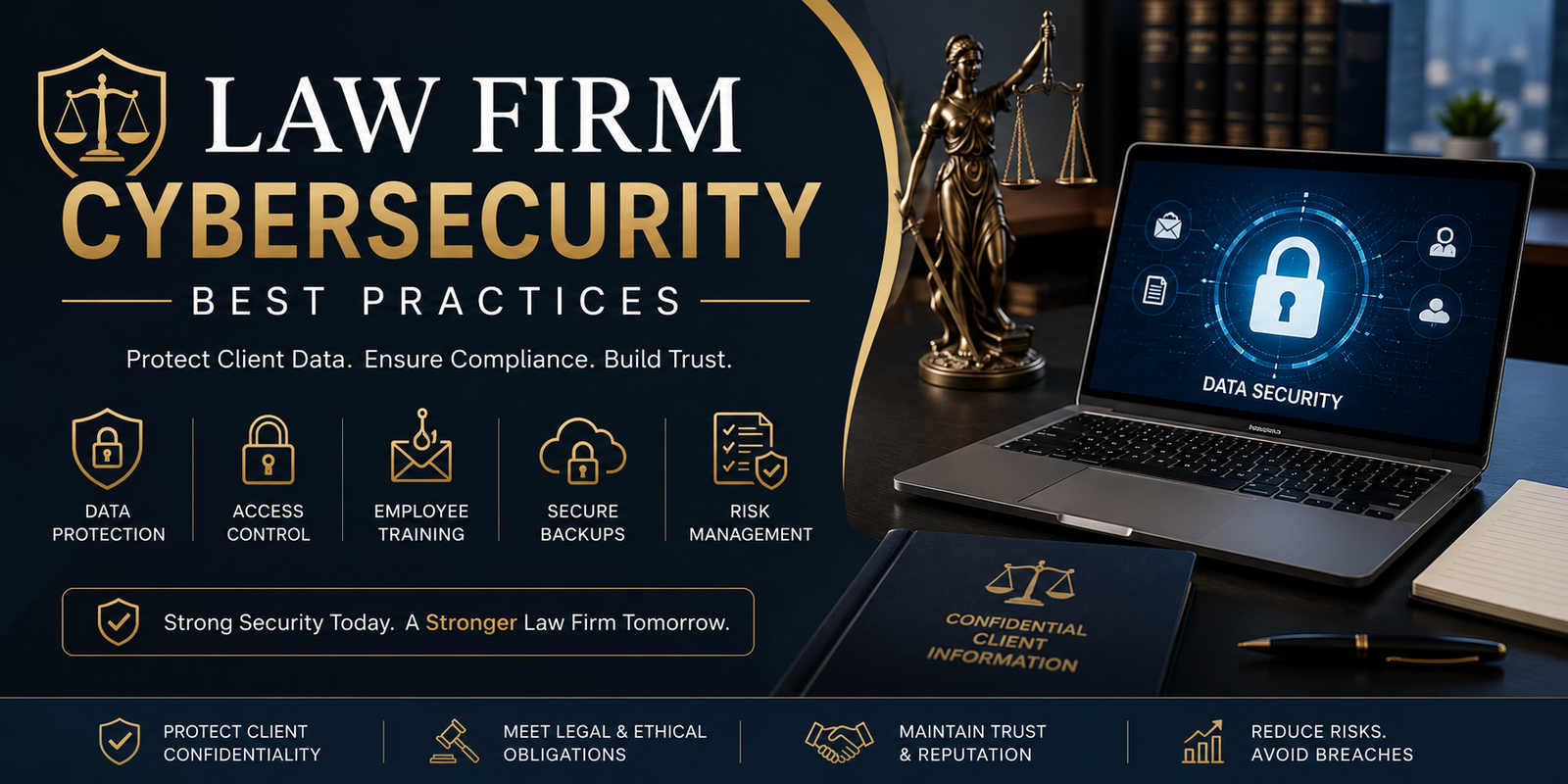
Law firms manage some of the most sensitive information in the business world, including confidential client records, legal strategies, financial documents, contracts, and intellectual property. This makes them attractive targets for cybercriminals who want to steal valuable data, launch ransomware attacks, or commit fraud.
Modern legal practices cannot rely only on traditional security methods. With cloud-based case management systems, remote work, digital communication, and online document sharing becoming common, every law firm needs a strong cybersecurity strategy.
Following effective Law Firm Cybersecurity Best Practices helps protect client confidentiality, maintain trust, reduce financial risks, and meet professional responsibilities. Whether a firm has hundreds of employees or operates with only a few attorneys, cybersecurity should be treated as a core business priority rather than just an IT concern.
Why Cybersecurity Is Critical for Law Firms
Law firms are responsible for protecting large amounts of confidential information. A single security incident can expose client data, damage a firm's reputation, and create legal consequences.
Unlike many businesses, law firms often store information related to mergers, lawsuits, financial transactions, criminal cases, and private agreements. Cybercriminals know this information has significant value and may target firms because they expect valuable data and weaker security controls.
Strong cybersecurity also supports professional obligations. Attorneys have a responsibility to take reasonable steps to protect client information and maintain confidentiality.
For example, if a law firm's employee accidentally shares sensitive case files through an unsecured email account, the consequences could include client complaints, regulatory concerns, and loss of trust.
Why Law Firms Are Attractive Targets for Cybercriminals
Cyber attackers frequently target law firms because they collect valuable information from multiple clients in one location.
Common targets include:
Client personal information
Business contracts
Intellectual property documents
Financial records
Litigation strategies
Settlement agreements
A successful attack can provide criminals with opportunities for identity theft, corporate espionage, blackmail, or financial fraud.
Small and medium-sized law firms are also attractive because attackers often assume these firms have fewer security resources compared with large organizations.
Common Cybersecurity Threats Facing Law Firms
Understanding common threats is the first step toward building a stronger security strategy.
Phishing Attacks
Phishing remains one of the biggest cybersecurity risks for legal organizations. Attackers often send fake emails pretending to be clients, partners, courts, or financial institutions.
A lawyer may receive an email that appears legitimate but contains a malicious attachment or fake login page designed to steal credentials.
Employee awareness training and email security solutions can significantly reduce phishing risks.
Ransomware Attacks
Ransomware attacks encrypt important files and prevent organizations from accessing their own data.
For law firms, ransomware can stop access to:
Case documents
Client records
Legal research
Billing information
Regular backups, endpoint protection, and incident response planning are essential defenses against ransomware.
Insider Threats
Not every security risk comes from outside attackers. Employees, contractors, or former staff members can accidentally or intentionally expose sensitive information.
Common causes include:
Weak passwords
Incorrect file sharing
Unauthorized access
Lost devices
Proper access controls help ensure employees only access information required for their role.
Cloud Security Risks
Many law firms use cloud platforms for document storage, communication, and collaboration. While cloud technology offers flexibility, poor configuration can create security vulnerabilities.
Firms should regularly review:
User permissions
Data sharing settings
Account security
Third-party integrations
15 Law Firm Cybersecurity Best Practices
Implementing a layered security approach is the most effective way to protect legal data.
1. Enable Multi-Factor Authentication
Multi-factor authentication adds an additional security layer beyond passwords.
Even if an attacker steals a password, they still need another verification method, such as an authentication app or security code.
Law firms should enable MFA for:
Email accounts
Cloud storage
Case management software
Administrative systems
2. Encrypt Sensitive Client Data
Encryption protects information by converting it into unreadable data that requires proper authorization to access.
Law firms should encrypt:
Client files
Emails containing confidential information
Stored documents
Backup data
3. Use Strong Access Control Policies
Every employee should only have access to information necessary for their responsibilities.
Role-based access reduces the risk of accidental exposure and limits damage if an account becomes compromised.
4. Train Employees Regularly
Technology alone cannot prevent every attack. Employees are one of the most important parts of cybersecurity.
Training should cover:
Identifying phishing emails
Creating strong passwords
Secure document sharing
Reporting suspicious activity
5. Maintain Secure Backups
Reliable backups allow firms to recover quickly after ransomware attacks or accidental data loss.
A strong backup strategy should include:
Multiple backup copies
Offline storage options
Regular recovery testing
6. Keep Software Updated
Outdated software often contains security weaknesses that attackers can exploit.
Law firms should regularly update:
Operating systems
Legal software
Security applications
Cloud platforms
7. Protect Remote Work Environments
Remote work has increased cybersecurity challenges for legal professionals.
Firms should secure remote access through:
VPN connections
Protected devices
Secure Wi-Fi networks
Endpoint monitoring
8. Create a Cybersecurity Policy
A written cybersecurity policy provides employees with clear security expectations.
Important policies include:
Password policies
Device usage rules
Remote work procedures
Data protection guidelines
Cybersecurity Controls Comparison for Law Firms
Cybersecurity Policies Every Law Firm Should Have
A cybersecurity policy creates a structured approach to protecting information.
Important policies include:
Data Protection Policy
This explains how client information should be stored, accessed, and shared.
Remote Work Policy
This defines security requirements for employees working outside the office.
Incident Response Policy
This explains what employees should do after discovering a security problem.
A strong response plan should identify:
Who manages the incident
How systems are isolated
How clients are informed
How recovery happens
Small Law Firm Cybersecurity Best Practices
Smaller firms often believe cybersecurity requires expensive technology, but many important improvements are affordable.
A small law firm can strengthen security by:
Enabling MFA
Using password managers
Training employees
Updating software
Creating reliable backups
Reviewing user permissions
For example, a five-person legal practice can significantly improve protection by implementing basic security controls before investing in advanced solutions.
Cybersecurity Careers and Legal Security Expertise
As cyber threats continue increasing, demand for professionals who understand both technology and law is growing.
This has created opportunities in areas such as:
Law firm cybersecurity jobs
Data privacy consulting
Cyber risk management
Digital compliance
Professionals interested in cybersecurity law may explore careers involving regulations, breach investigations, and technology-related legal matters.
People searching for a cybersecurity attorney near me are often looking for legal professionals who can assist with data breaches, privacy issues, compliance requirements, and cybercrime cases.
Cybersecurity-focused legal careers can also be financially rewarding. A cybersecurity lawyer salary varies based on experience, location, specialization, and employer, but professionals with both legal and technical knowledge are increasingly valuable.
How to Build a 90-Day Cybersecurity Plan for a Law Firm
A structured approach makes cybersecurity improvements easier.
First 30 Days: Security Assessment
Actions:
Review current security controls
Identify vulnerabilities
Check employee access permissions
Evaluate backup systems
Days 31–60: Security Improvements
Actions:
Enable MFA
Update software
Improve employee training
Strengthen data protection
Days 61–90: Long-Term Protection
Actions:
Test incident response plans
Monitor security events
Review policies
Conduct regular security assessments
Future of Law Firm Cybersecurity
Cybersecurity threats are constantly evolving. Future challenges will include AI-powered attacks, deepfake scams, and increasingly sophisticated phishing campaigns.
At the same time, artificial intelligence and automation will help firms detect unusual activity faster and improve threat response.
Law firms that invest in modern cybersecurity strategies will be better prepared to protect client relationships and maintain trust.
Conclusion
Cybersecurity is now a fundamental requirement for every modern law firm. Protecting confidential client information requires more than antivirus software; it requires policies, employee awareness, strong access controls, and continuous monitoring.
By following effective law firm cybersecurity best practices, legal organizations can reduce risks, protect sensitive information, and maintain the trust that clients expect.
Frequently Asked Questions
What are the most important cybersecurity practices for law firms?
The most important law firm cybersecurity best practices include multi-factor authentication, encryption, employee training, secure backups, access controls, and incident response planning.
Why are law firms targeted by cybercriminals?
Law firms are targeted because they store valuable confidential information, including personal data, financial records, business documents, and legal strategies.
How can small law firms improve cybersecurity?
Small firms can improve security by implementing MFA, creating cybersecurity policies, training employees, updating software, and maintaining secure backups.
Do lawyers need cybersecurity policies?
Yes. Cybersecurity policies help law firms protect client information, define employee responsibilities, and respond effectively to security incidents.
What does a cybersecurity attorney do?
A cybersecurity attorney helps organizations with data breaches, privacy regulations, cybercrime issues, compliance requirements, and technology-related legal matters.
Are cybersecurity law careers growing?
Yes. Increasing cyber threats have created more demand for professionals working in cybersecurity law, privacy compliance, and digital risk management.
What industries need cybersecurity lawyers?
Industries including finance, healthcare, technology, government, and legal services require cybersecurity lawyers to handle complex digital security issues.
Leave a Reply