

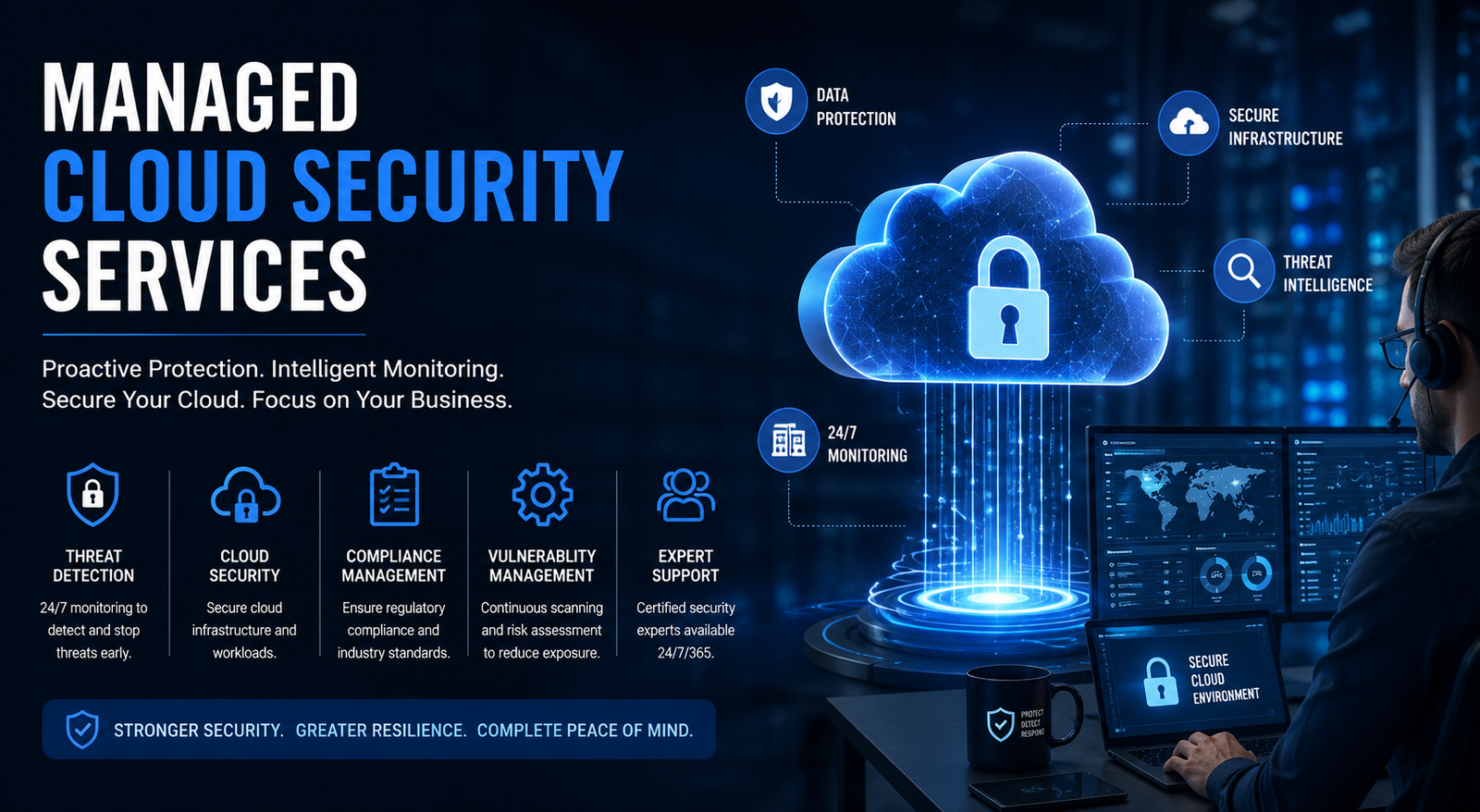
Cloud adoption has transformed how businesses store data, run applications, and deliver services. However, moving to the cloud also introduces new security challenges, including misconfigurations, unauthorized access, data exposure, and increasingly sophisticated cyberattacks.
Managed cloud security services help organizations protect their cloud environments by providing continuous monitoring, threat detection, vulnerability management, and expert security support. Instead of relying only on internal IT teams, businesses can work with specialized security providers that offer advanced tools, experienced analysts, and proactive protection.
As cloud environments become more complex across platforms like AWS, Microsoft Azure, and Google Cloud, managed security solutions are becoming essential for companies that want stronger protection without building a large in-house cybersecurity team.
What Are Managed Cloud Security Services?
Managed cloud security services are outsourced security solutions where a specialized provider manages and protects an organization’s cloud infrastructure. These services help identify risks, monitor suspicious activity, prevent attacks, and maintain compliance with industry security standards.
A managed cloud security provider typically handles tasks such as:
Continuous cloud monitoring
Threat detection and response
Identity and access management
Vulnerability assessment
Data protection
Compliance monitoring
Security reporting
Unlike traditional security approaches that depend heavily on internal teams, managed services provide access to cybersecurity experts who monitor cloud environments around the clock.
For businesses with limited security resources, these services offer a practical way to improve protection while reducing operational complexity.
How Do Managed Cloud Security Services Work?
Managed cloud security services follow a structured process to protect cloud environments from potential threats.
Cloud Security Assessment
The first step is understanding the current security posture. Providers analyze cloud infrastructure, applications, user permissions, and configurations to identify weaknesses.
This assessment helps organizations discover problems such as:
Exposed cloud storage
Weak authentication settings
Outdated software
Excessive user permissions
Continuous Monitoring and Threat Detection
After assessment, security teams continuously monitor cloud activity for suspicious behavior.
Modern solutions use automation, threat intelligence, and cloud security AI technologies to detect unusual patterns faster than manual monitoring.
Examples include:
Detecting unauthorized login attempts
Identifying malware activity
Monitoring unusual data transfers
Finding risky configuration changes
Incident Response and Recovery
When a threat is detected, managed security teams investigate the issue and take appropriate action.
The response process may include:
Containing the attack
Removing malicious activity
Restoring affected systems
Creating security reports
This rapid response reduces potential downtime and financial damage.
Why Businesses Need Managed Cloud Security Services
Cloud security has become more challenging because attackers constantly develop new techniques. Many organizations struggle to maintain strong protection because they lack cybersecurity expertise, resources, or 24/7 monitoring capabilities.
Some major reasons businesses invest in managed cloud security include:
Increasing Cybersecurity Threats
Cloud environments are targeted by attackers because they often contain valuable business data.
Common cloud threats include:
Account hijacking
Data breaches
API attacks
Ransomware
Misconfigured cloud resources
Managed security providers help identify and reduce these risks before they become serious incidents.
Limited Internal Security Expertise
Hiring a complete cybersecurity team can be expensive and difficult, especially for small and medium-sized businesses.
Managed services provide access to:
Security analysts
Threat researchers
Cloud security specialists
Incident response experts
Compliance Requirements
Many industries must follow strict security regulations. Managed cloud security services help organizations maintain compliance through monitoring, reporting, and security controls.
Common compliance areas include:
Data privacy regulations
Healthcare security requirements
Financial security standards
Industry-specific frameworks
Key Components of Managed Cloud Security Services
A complete cloud security strategy includes multiple layers of protection.
Cloud Security Monitoring
Security monitoring provides visibility into cloud environments by tracking activities, users, and system changes.
It helps organizations detect:
Unauthorized access
Suspicious behavior
Security policy violations
Identity and Access Management (IAM)
Identity management ensures that only authorized users can access sensitive resources.
Important IAM practices include:
Multi-factor authentication
Role-based permissions
Least privilege access
Privileged account monitoring
Cloud Vulnerability Management
Vulnerability management identifies weaknesses in cloud systems and applications.
Security teams regularly scan environments for:
Software vulnerabilities
Configuration issues
Security gaps
Data Protection and Encryption
Data protection prevents unauthorized access to sensitive information.
Managed security services often include:
Data encryption
Backup security
Access monitoring
Data loss prevention
Compliance Management
Organizations need proper documentation and security controls to pass audits.
Managed providers assist with:
Compliance reports
Security assessments
Policy management
Benefits of Managed Cloud Security Services
Businesses gain several advantages by using professional cloud security support.
Improved Threat Detection
Managed providers use advanced tools to identify threats quickly. Automated systems analyze large amounts of security data and highlight suspicious activity.
Reduced Security Costs
Building an internal security operation requires significant investment in:
Staff training
Security tools
Monitoring systems
Infrastructure
Managed services provide enterprise-level protection without requiring a large internal team.
Better Cloud Visibility
Many businesses do not have complete visibility into their cloud environments. Managed security platforms provide centralized monitoring and detailed security insights.
Managed Cloud Security Services vs Traditional Cloud Security
Understanding the difference between these approaches helps businesses choose the right strategy.
Traditional security can work for organizations with strong cybersecurity teams. However, businesses with limited resources often benefit more from managed solutions.
Managed Cloud Security vs MSSP, MDR, and CNAPP
Many security terms can create confusion.
Managed Security Service Provider (MSSP)
An MSSP provides outsourced cybersecurity management, including monitoring and security operations.
Managed Detection and Response (MDR)
MDR focuses mainly on detecting threats and responding to security incidents.
Cloud-Native Application Protection Platform (CNAPP)
CNAPP solutions combine multiple cloud security capabilities, including:
Cloud workload protection
Cloud security posture management
Application security
Managed cloud security services often combine these technologies with human expertise to provide complete protection.
How Managed Cloud Security Protects AWS, Azure, and Google Cloud
Modern businesses use different cloud platforms, and security requirements vary between them.
AWS Security Management
Managed providers help secure AWS environments through:
Identity controls
Configuration monitoring
Threat detection
Resource protection
Azure Security Management
Azure security services focus on:
Access management
Cloud monitoring
Application protection
Google Cloud Security Management
Google Cloud security includes:
Identity protection
Data security
Workload monitoring
A strong provider should understand multiple cloud platforms and support hybrid or multi-cloud environments.
How to Choose the Right Managed Cloud Security Provider
Choosing the right provider requires evaluating security expertise, technology, and service quality.
Consider these factors:
Cloud Expertise
Look for providers experienced with:
AWS
Azure
Google Cloud
Hybrid environments
Security Capabilities
Evaluate whether they offer:
24/7 monitoring
Threat response
Vulnerability management
Compliance assistance
Certifications and Experience
Security certifications demonstrate professional knowledge. Many cybersecurity professionals improve their skills through a cloud security course or advanced cloud security certification programs.
Certifications can also help organizations identify qualified security teams.
Service Transparency
A reliable provider should offer:
Clear reporting
Defined response times
Security performance metrics
Career Opportunities in Cloud Security
The growth of cloud adoption has increased demand for cybersecurity professionals.
Popular Cloud Security jobs include:
Cloud Security Engineer
Cloud Security Architect
Security Analyst
Cloud Compliance Specialist
DevSecOps Engineer
Professionals interested in this field often pursue cloud security training and certifications to develop expertise in cloud platforms, security tools, and risk management.
Future Trends in Managed Cloud Security
Cloud security continues evolving as technology advances.
Major trends include:
Artificial Intelligence in Security
Cloud security AI helps organizations analyze threats faster and automate security responses.
Zero Trust Security
Zero Trust models assume no user or device should automatically be trusted.
Security Automation
Automation reduces response times and improves efficiency.
Increased Cloud Compliance
Organizations will continue investing in security solutions that support regulatory requirements.
Conclusion
Managed cloud security services provide businesses with a reliable way to protect modern cloud environments against evolving cyber threats. By combining expert security teams, advanced monitoring tools, automation, and compliance support, these services help organizations improve protection while reducing complexity.
As cloud technology continues expanding, investing in professional cloud security solutions will become increasingly important for businesses that want to protect valuable data, maintain trust, and operate securely.
Frequently Asked Questions About Managed Cloud Security Services
What are managed cloud security services?
Managed cloud security services are outsourced solutions that help businesses monitor, protect, and manage cloud security risks through expert teams and advanced security tools.
Why are managed cloud security services important?
They provide continuous protection, faster threat detection, and access to cybersecurity expertise that many organizations cannot maintain internally.
Are managed cloud security services suitable for small businesses?
Yes. Small businesses can benefit because managed services provide professional security capabilities without requiring a large cybersecurity department.
What does a managed cloud security provider do?
A provider monitors cloud environments, identifies threats, manages vulnerabilities, supports compliance, and responds to security incidents.
How much do managed cloud security services cost?
Costs depend on factors such as cloud size, security requirements, compliance needs, and the level of monitoring required.
Is cloud security a good career option?
Yes. Growing cloud adoption has increased demand for professionals with cloud security certification, technical skills, and cybersecurity experience.
Leave a Reply