

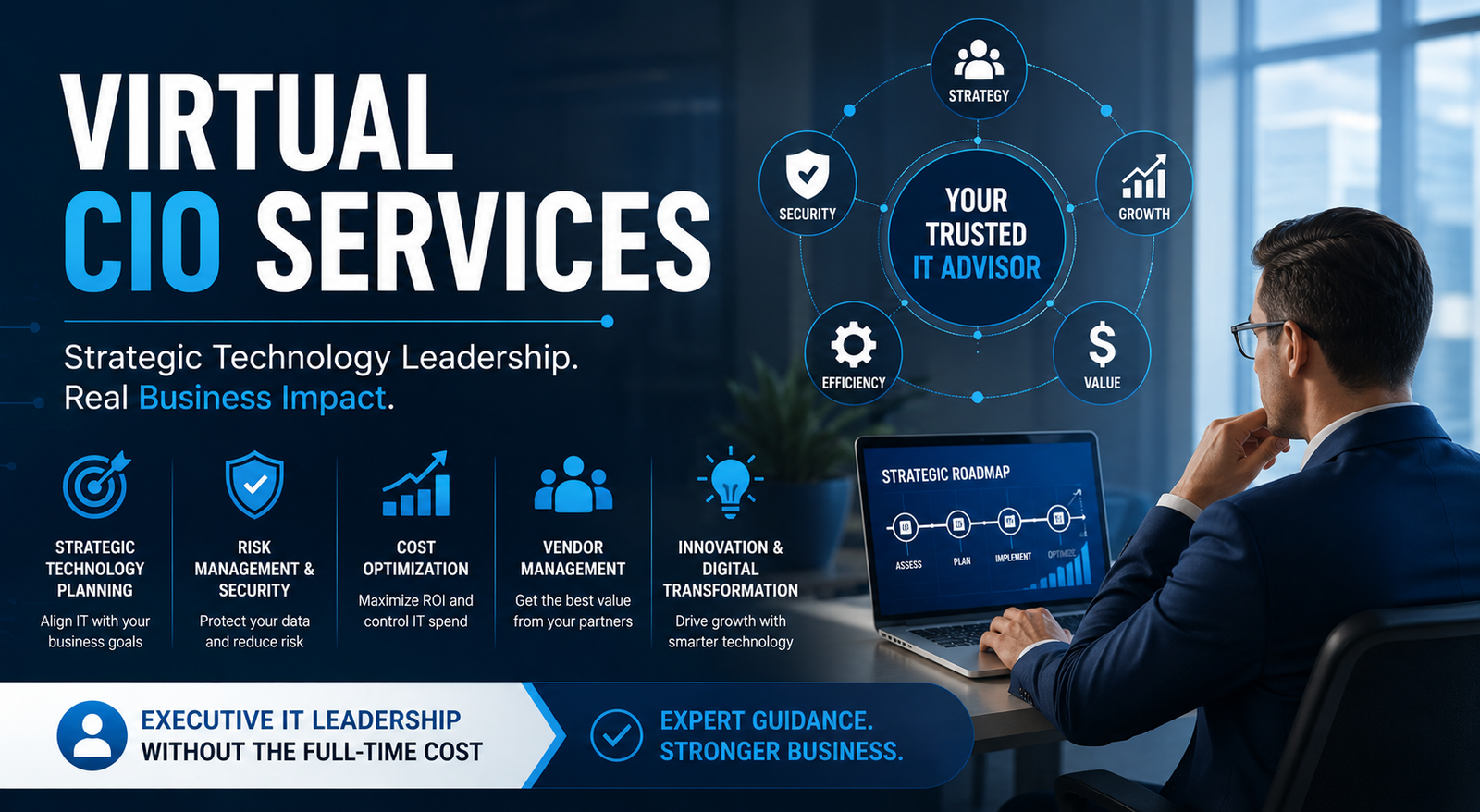
Technology has become one of the most important drivers of business success, but many organisations struggle to manage their IT strategy effectively. While hiring a full-time Chief Information Officer (CIO) can provide executive-level guidance, the cost is often too high for small and mid-sized businesses. This is where virtual CIO services provide a practical solution.
A virtual CIO (vCIO) gives businesses access to experienced technology leadership without the expense of adding a full-time executive to the payroll. These professionals help organisations create IT strategies, improve cybersecurity, manage technology investments, and align digital solutions with long-term business goals.
Unlike traditional IT support that focuses on fixing immediate problems, virtual CIO services focus on proactive planning and strategic decision-making. They help businesses understand where their technology stands today and create a roadmap for future growth.
Whether a company needs better cybersecurity, cloud migration guidance, compliance support, or a complete technology roadmap, a vCIO can provide the expertise needed to make smarter IT decisions.
What Are Virtual CIO Services?
Virtual CIO services are outsourced technology leadership solutions where an experienced IT executive acts as a company’s Chief Information Officer on a flexible basis. Instead of hiring a permanent CIO, businesses can work with a virtual CIO who provides strategic guidance, planning, and technology management.
A virtual CIO works closely with business leaders to understand organisational goals and create technology strategies that support growth. They evaluate existing systems, identify risks, recommend improvements, and ensure technology investments deliver measurable value.
Common responsibilities of virtual CIO services include:
Developing long-term IT strategies
Creating technology roadmaps
Managing IT budgets
Improving cybersecurity planning
Evaluating software and hardware investments
Guiding cloud adoption
Managing technology vendors
Supporting compliance requirements
Improving disaster recovery planning
A vCIO is different from traditional IT support because their role is focused on leadership rather than daily troubleshooting. They help businesses make strategic technology decisions before problems occur.
How Do Virtual CIO Services Work?
Virtual CIO services typically follow a structured process designed to understand a company’s current technology environment and future needs.
Initial Technology Assessment
The first step is usually a complete review of the organisation’s IT infrastructure. The vCIO evaluates existing systems, cybersecurity measures, software platforms, network performance, and business processes.
This assessment helps identify weaknesses, opportunities, and areas where technology can improve efficiency.
Developing an IT Strategy and Roadmap
After understanding the business environment, the virtual CIO creates a customised technology roadmap. This plan outlines recommended improvements, estimated costs, priorities, and timelines.
For example, a growing company may need:
Cloud migration planning
Better employee security training
Updated network infrastructure
Improved backup solutions
New business applications
The roadmap ensures technology decisions support business objectives instead of being reactive.
Ongoing Strategic Guidance
A virtual CIO continues working with leadership teams through regular meetings and progress reviews. They monitor technology performance, review security risks, evaluate vendors, and adjust strategies as business needs change.
Many organisations use vCIO services through monthly retainers, allowing them to access executive-level IT expertise without hiring a full-time CIO.
Core Responsibilities of a Virtual CIO
A virtual CIO performs many of the same strategic functions as an internal CIO. Their responsibilities go beyond technical support and focus on business transformation.
IT Strategy Development
One of the primary responsibilities of a vCIO is creating a technology strategy that aligns with company goals. They analyse current systems and recommend improvements that increase productivity, reduce costs, and support expansion.
Technology Roadmap Planning
A technology roadmap provides businesses with a clear plan for future IT investments. It helps organisations avoid unnecessary spending and ensures technology upgrades happen at the right time.
Cybersecurity Leadership
Cybersecurity has become a major priority for businesses of every size. A virtual CIO helps develop security strategies, identify vulnerabilities, and implement better protection measures.
This may include:
Security assessments
Risk management
Employee security awareness
Access control improvements
Incident response planning
For organisations requiring specialised security leadership, some providers also offer related roles such as a vCISO (Virtual Chief Information Security Officer) who focuses specifically on cybersecurity strategy.
IT Budget Planning
A vCIO helps businesses create realistic technology budgets by identifying essential investments and reducing unnecessary expenses.
Instead of spending money on random upgrades, companies can prioritise projects that provide the highest business impact.
Vendor Management
Many organisations work with multiple technology vendors, including software providers, cloud platforms, and managed service providers. A virtual CIO evaluates vendor performance, negotiates recommendations, and ensures technology partners deliver value.
Virtual CIO vs Traditional CIO vs IT Director vs IT Consultant
Understanding the difference between technology leadership roles helps businesses choose the right solution.
A virtual CIO provides many benefits of an executive technology leader while offering more flexibility and affordability.
Benefits of Virtual CIO Services
Businesses choose virtual CIO services because they provide strategic expertise without the expense of hiring a permanent executive.
Cost-Effective Executive Leadership
Hiring a full-time CIO involves a significant salary, benefits package, and recruitment costs. A vCIO allows companies to access similar expertise through a flexible service model.
This makes strategic IT leadership available to smaller organisations that may not have the budget for a permanent CIO.
Better Technology Decision-Making
Many businesses invest in technology without a clear strategy. A virtual CIO helps leaders understand which solutions provide real value and which expenses can be avoided.
They evaluate technology based on business goals rather than short-term trends.
Improved Cybersecurity Protection
Cyber threats continue to increase, and many businesses lack internal expertise to manage security risks. Virtual CIO services help organisations create stronger security strategies and prepare for potential incidents.
Increased Business Efficiency
By improving systems, automating processes, and recommending better tools, a vCIO can help businesses increase productivity and reduce operational challenges.
Scalable IT Support
A company’s technology needs change as it grows. Virtual CIO services can scale with the organisation, providing more guidance during major projects and less involvement during stable periods.
Industries That Benefit From Virtual CIO Services
Virtual CIO services are useful across many industries where technology plays an important role.
Healthcare
Healthcare organisations require strong cybersecurity, compliance management, and reliable systems. A vCIO can help clinics and healthcare providers improve technology while supporting requirements such as data protection.
Legal Firms
Law firms manage sensitive client information and require secure systems. A virtual CIO can help improve document security, access controls, and technology planning.
Financial Services
Banks, accounting firms, and financial organisations benefit from strategic IT leadership that focuses on security, compliance, and risk reduction.
Manufacturing Companies
Manufacturers often rely on complex systems, automation tools, and operational technology. A vCIO can guide digital transformation and infrastructure improvements.
Professional Services Businesses
Consulting firms, agencies, and growing businesses often need enterprise-level IT guidance without hiring a full-time CIO.
What Does a Virtual CIO Actually Deliver?
A professional virtual CIO provides several strategic deliverables that help businesses manage technology effectively.
These deliverables allow business owners and executives to make informed decisions about their technology future.
How Much Do Virtual CIO Services Cost?
The cost of virtual CIO services depends on factors such as company size, industry requirements, technology complexity, and the level of involvement required.
Most providers use flexible pricing models, including:
Monthly retainer packages
Hourly consulting
Project-based engagements
Long-term strategic partnerships
A small business may only need occasional strategic meetings, while a growing organisation may require continuous technology leadership.
Compared with hiring a full-time CIO, virtual CIO services are usually more affordable because businesses pay only for the expertise and time they need.
Virtual CIO Services vs Managed IT Services
Many businesses confuse virtual CIO services with managed IT services because both involve outsourced technology support. However, they serve different purposes.
Managed IT services focus mainly on maintaining systems, resolving technical problems, monitoring networks, and keeping daily operations running smoothly.
A virtual CIO focuses on the bigger picture by helping organisations make strategic technology decisions that support business growth.
Many organisations combine both services. A managed IT provider may handle daily technical tasks while a virtual CIO guides strategic decisions.
How Virtual CIO Services Improve Cybersecurity
Cybersecurity is one of the most important areas where virtual CIO services provide value. Many businesses have basic security tools but lack a complete security strategy.
A vCIO helps organisations move from reactive security management to proactive risk prevention.
Key cybersecurity responsibilities include:
Evaluating security risks
Developing cybersecurity strategies
Reviewing security policies
Improving employee awareness
Planning incident response
Supporting compliance requirements
Reviewing backup and disaster recovery plans
For example, a healthcare company may have antivirus software and backups but still lack a complete security roadmap. A virtual CIO can identify weaknesses and create a structured plan to improve protection.
For organisations requiring deeper security leadership, a vCISO can work alongside a vCIO to focus specifically on cybersecurity governance, threat management, and compliance.
Building a Long-Term Technology Roadmap
A major benefit of virtual CIO services is creating a clear technology roadmap. Without proper planning, businesses often make expensive technology decisions based on immediate problems rather than future needs.
A vCIO helps create a roadmap that covers:
Current technology assessment
Future business goals
Infrastructure improvements
Cloud strategy
Software upgrades
Security improvements
Budget planning
Digital transformation opportunities
For example, a company planning to expand from 50 employees to 200 employees may need better cloud systems, improved security controls, and scalable communication tools. A virtual CIO can prepare the organisation before growth creates technology problems.
Virtual CIO Services Career Opportunities and Jobs
As more businesses adopt outsourced technology leadership, demand for virtual CIO professionals continues to grow. Experienced IT leaders are increasingly moving into flexible consulting roles instead of traditional executive positions.
Virtual CIO Jobs
Virtual CIO jobs typically require strong experience in:
IT leadership
Business strategy
Cybersecurity
Cloud technologies
Project management
Vendor management
Technology budgeting
Common job titles related to this field include:
Virtual CIO
Fractional CIO
Technology Advisor
IT Strategy Consultant
Virtual Chief Information Officer
IT Executive Consultant
Professionals with experience managing enterprise technology environments are often well-positioned for vCIO roles.
Virtual CIO Services Careers
A career in virtual CIO services can be attractive for technology professionals who want flexibility and the opportunity to work with multiple businesses.
Many vCIO professionals come from backgrounds such as:
IT directors
CIO positions
Infrastructure managers
Cybersecurity leadership roles
Enterprise architects
The growing demand for outsourced leadership has created more vCIO services careers for experienced technology experts.
Virtual CIO Salary and Earning Potential
The salary of a virtual CIO depends on experience, location, industry knowledge, and whether the professional works independently or through a technology services company.
A virtual CIO services salary can vary significantly because some professionals work as consultants while others are employed by managed service providers.
Factors affecting vCIO salary include:
Years of IT leadership experience
Technical expertise
Business consulting skills
Number of clients managed
Industry specialisation
Cybersecurity knowledge
The virtual chief information officer salary may also increase for professionals with advanced certifications, executive experience, and knowledge of compliance frameworks.
Unlike traditional employment, independent vCIO professionals may earn through consulting agreements, monthly retainers, and strategic advisory contracts.
How to Choose the Right Virtual CIO Provider
Selecting the right virtual CIO provider is an important decision because they will influence your organisation’s technology direction.
Consider the following factors:
Industry Experience
Choose a provider that understands your industry challenges, compliance requirements, and technology needs.
A healthcare organisation, for example, may need a vCIO with experience in healthcare security and compliance.
Strategic Approach
A good vCIO should focus on business outcomes, not only technology recommendations.
They should understand:
Your growth goals
Operational challenges
Budget limitations
Security requirements
Communication and Reporting
A strong virtual CIO provides regular updates, strategic reports, and clear recommendations.
Look for providers who offer:
Quarterly business reviews
Technology reports
Risk assessments
Roadmap updates
Security Expertise
Cybersecurity should be a major consideration when selecting a vCIO provider. Experience with frameworks such as NIST, ISO 27001, SOC 2, and industry compliance standards can add significant value.
Common Mistakes Businesses Make When Hiring a Virtual CIO
While virtual CIO services provide many benefits, businesses should avoid common mistakes.
Choosing Only Based on Price
The cheapest provider may not provide the strategic expertise required. Businesses should evaluate experience, approach, and long-term value.
Expecting a vCIO to Replace All IT Support
A virtual CIO focuses on strategy rather than handling every technical issue. Many companies still need internal IT teams or managed service providers.
Not Defining Goals
Before hiring a vCIO, businesses should identify their objectives, such as improving security, reducing costs, or preparing for growth.
Ignoring Long-Term Planning
Technology decisions should support future business goals. A vCIO relationship works best when businesses focus on long-term improvement rather than immediate fixes.
Real-World Virtual CIO Use Cases
Growing Professional Services Company
A consulting firm with 80 employees struggled with increasing technology costs and inconsistent security practices.
A virtual CIO reviewed their infrastructure, created an IT roadmap, improved cybersecurity planning, and helped prioritise technology investments.
The company gained better visibility into technology spending and improved operational efficiency.
Healthcare Organisation
A healthcare provider needed stronger security controls and compliance planning.
The virtual CIO developed a cybersecurity strategy, reviewed vendors, and improved backup and recovery processes.
This helped the organisation create a stronger technology foundation.
Manufacturing Business
A manufacturing company relied on outdated systems that limited growth.
A vCIO created a modernisation roadmap covering cloud solutions, automation opportunities, and infrastructure improvements.
The company was able to plan upgrades strategically instead of reacting to system failures.
Conclusion
Virtual CIO services give businesses access to executive-level technology expertise without the cost and commitment of hiring a full-time CIO. By providing strategic planning, cybersecurity guidance, budgeting support, and technology roadmaps, a vCIO helps organisations make smarter decisions.
As technology becomes increasingly important for business growth, having experienced IT leadership can provide a significant competitive advantage. Whether a company needs better security, improved efficiency, or a long-term digital strategy, virtual CIO services offer a flexible solution for modern organisations.
Frequently Asked Questions About Virtual CIO Services
What are virtual CIO services?
Virtual CIO services provide outsourced technology leadership from an experienced IT executive who helps businesses develop strategies, manage risks, and make better technology decisions without hiring a full-time CIO.
How much do virtual CIO services cost?
The cost depends on business size, service requirements, and engagement type. Providers may charge through monthly retainers, hourly consulting, or project-based agreements.
What is the difference between a CIO and a virtual CIO?
A traditional CIO is a full-time employee responsible for technology leadership, while a virtual CIO provides similar strategic guidance on a flexible outsourced basis.
Are virtual CIO services only for small businesses?
No. While small and medium businesses often benefit greatly, larger organisations may also use virtual CIO services for specialised projects, technology planning, or additional leadership support.
Can a virtual CIO improve cybersecurity?
Yes. A virtual CIO can help develop cybersecurity strategies, identify risks, improve policies, and create stronger protection plans.
What skills are required for virtual CIO jobs?
Virtual CIO professionals typically need experience in IT leadership, cybersecurity, cloud technology, budgeting, project management, and business strategy.
What is the difference between a vCIO and a vCISO?
A vCIO focuses on overall technology strategy, while a vCISO specialises specifically in cybersecurity leadership, risk management, and security compliance.
Leave a Reply